Understand volumetric water content
Volumetric water content, often written as θ, is the volume of water divided by the volume of soil. A reading of 0.20 m³/m³ is equivalent to 20% water by volume. One cubic metre of soil at that water content contains 0.20 cubic metres, or 200 litres, of water.
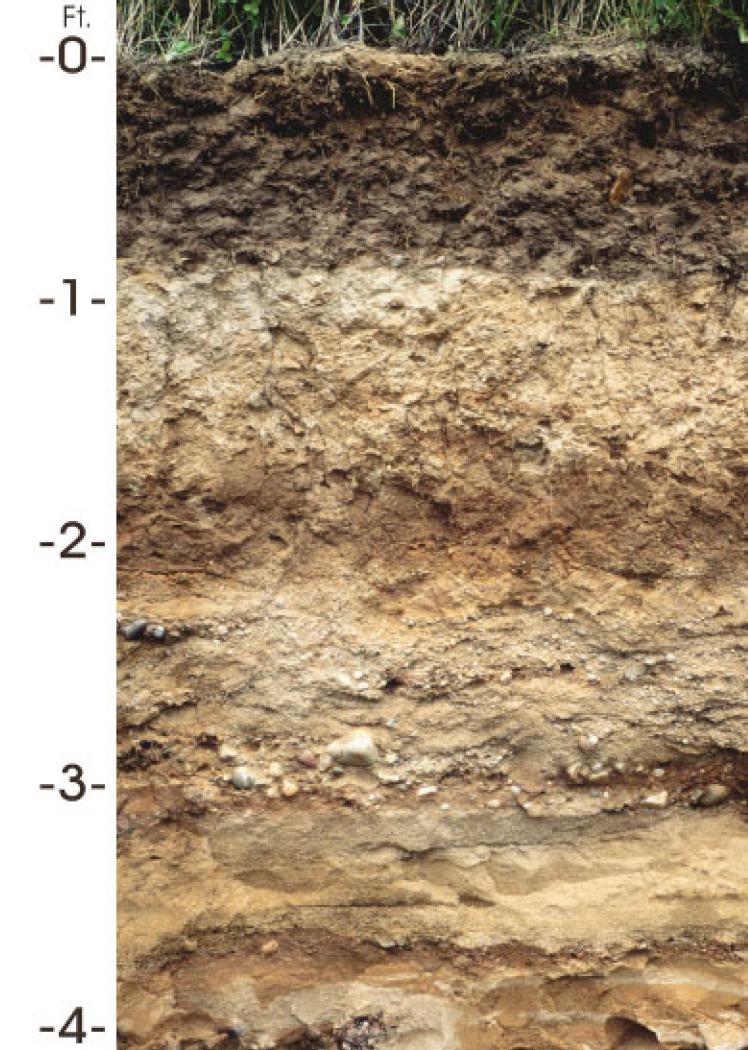
The same percentage can mean different things in different soils. A reading that is relatively wet for a sandy layer can be relatively dry for a clay-rich layer. Begin by connecting the reading to the soil texture and profile, the sensor's calibration and the crop's active roots.
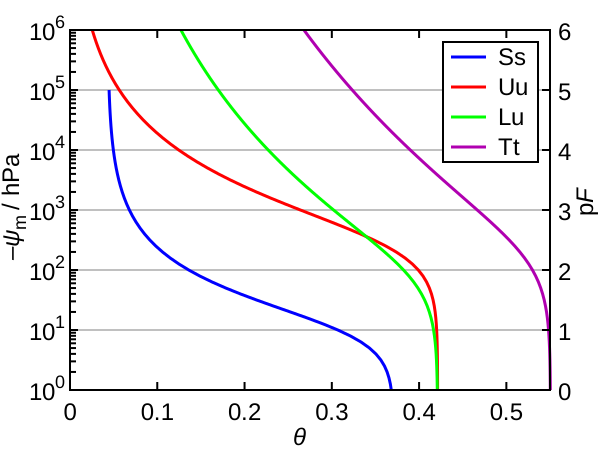
Keep water content separate from soil water tension. Tension describes how tightly water is held; water content describes the amount present. Both can inform irrigation, but their management thresholds are expressed in different units.
Field capacity, wilting point and irrigation triggers
Field capacity is the water content remaining after substantial drainage has slowed. Permanent wilting point represents a much drier reference condition where plants cannot recover from wilting under the usual definition. The difference between them is used to estimate plant-available water.
An irrigation trigger is normally set before that available water has been exhausted. The allowable depletion depends on crop, growth stage, atmospheric demand and the management objective. There is no universal percentage reading that works for every vineyard, orchard or vegetable crop.
To investigate a field-capacity reference, observe the profile after a substantial wetting event and follow how readings settle as drainage slows. Confirm the soil is adequately wetted and consider drainage restrictions. A fixed elapsed time after watering is only an approximation, especially where heavy soil or perched water changes the drainage rate.
Record the trigger and refill target with their supporting assumptions. Revisit them as roots develop or the crop enters a sensitive growth stage.
Read the root-zone profile
Install measurements at depths that describe the crop's active water uptake. A shallow sensor may respond quickly to irrigation and evaporation; a deeper sensor can show whether water reaches the lower root zone. Choose representative locations within each irrigation block and avoid treating one reading as a field-wide average without checking spatial variation.
After irrigation, compare the order and size of the responses at different depths. Then follow the drying trend over several days. A shallow response with little change below can indicate a small application or an incomplete wetting pattern. A strong response below the active roots may indicate water moving beyond the intended storage zone.
Interpret those patterns alongside rainfall, irrigation records, emitter position and crop demand. Sudden isolated jumps, flat readings or implausible values warrant an installation and data-quality check before changing the irrigation schedule.
Estimate the water depth needed to refill a layer
Where readings represent a layer reasonably well, its water deficit can be estimated from the difference between the target and current volumetric water content. Use fractions such as 0.30, rather than entering 30 for a percentage.
For example, assume the target is 0.30 m³/m³, the current reading is 0.22 m³/m³ and the represented layer is 300 mm thick. The estimated refill depth is (0.30 − 0.22) × 300 = 24 mm. If measured application efficiency is 80%, the corresponding gross applied depth is 24 ÷ 0.80 = 30 mm.
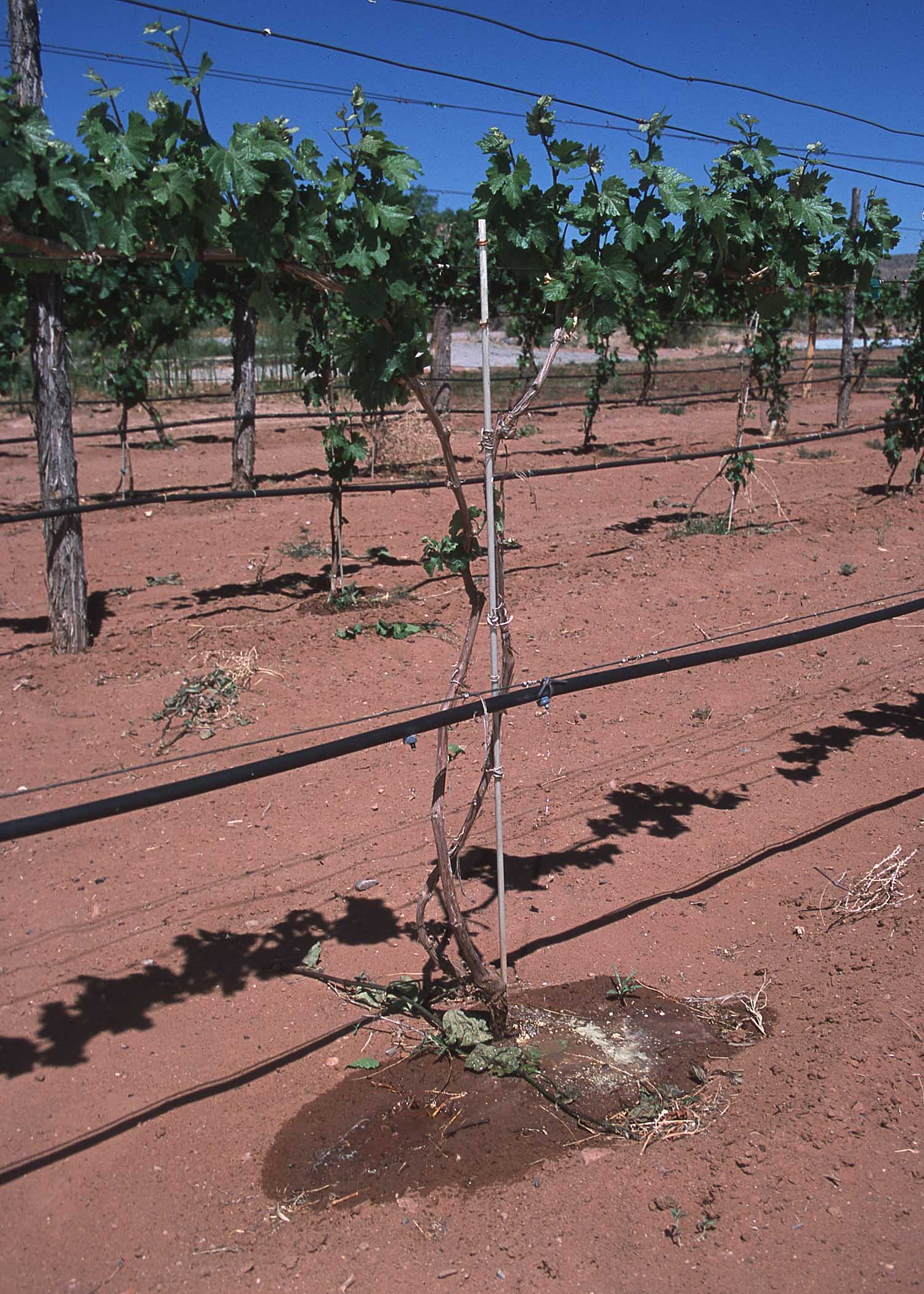
The estimate depends on representative layer readings and the stated application efficiency. For a layered profile, calculate each layer's deficit and sum the results. Include anticipated rainfall and the irrigation system's actual distribution. Drip irrigation requires particular care because a point reading inside a wetted bulb does not necessarily represent the entire soil area.
Apply water at a rate the site can accept, and check the sensor response afterwards. An estimated deficit alone does not determine an appropriate run time without knowing the system's measured delivery rate.
Build a repeatable irrigation routine
- Check readings for missing data, installation changes or unusual behaviour.
- Review moisture at the monitored depths against the current trigger.
- Consider forecast rain, crop stage and evapotranspiration demand.
- Choose the application from the intended refill depth and system performance.
- Confirm that the resulting wetting pattern reaches the intended roots.
A water-balance approach uses rainfall, irrigation and estimated evapotranspiration alongside changes in soil storage. Sensors provide an independent view of what happens in the field. Agreement improves confidence; disagreement is a reason to inspect the assumptions and equipment.
For systems that show several depths, review EnviroPro and Sentek EnviroSCAN. The comparison page brings sensing depth, power and communication into the same shortlist.
Common irrigation questions
Should I always irrigate back to field capacity?
The refill target depends on crop management, forecast rain, aeration, rooting conditions and irrigation performance. Field capacity is a useful reference, but it is not an automatic instruction to refill every layer after every event.
Can I use the same trigger throughout the farm?
Only after checking that the relevant soils, rooting depths and crop conditions are sufficiently similar. Different blocks or layers may need different thresholds. Validate the sensor calibration as well as the agronomic trigger.
Apply this to your monitoring plan
Adapt the water budget and placement to the crop and growing material.
- Field capacity, wilting point and plant available water
- Irrigating sandy and clay soils: frequency, duration and depth
- Soil sensors in vineyards: follow the wetted root zone
- Soil sensors for citrus and orchards: roots, wetting and drainage
- Greenhouse moisture sensors: soil beds, containers and substrates