Design monitoring around an action
Begin with the decision the grower needs to make: when to irrigate, whether water reaches deeper roots, or whether salinity needs investigation. Define who checks the readings and how quickly they must act. That determines the necessary measurement depth, update interval and data delivery. A device collecting excellent data in an unrepresentative location can still support a poor decision. Divide the field into management zones using irrigation layout, soil variation and crop observations. The first installation should test whether the selected locations represent those zones before the same pattern is repeated across the farm.
Vineyards: monitor the irrigated root zone
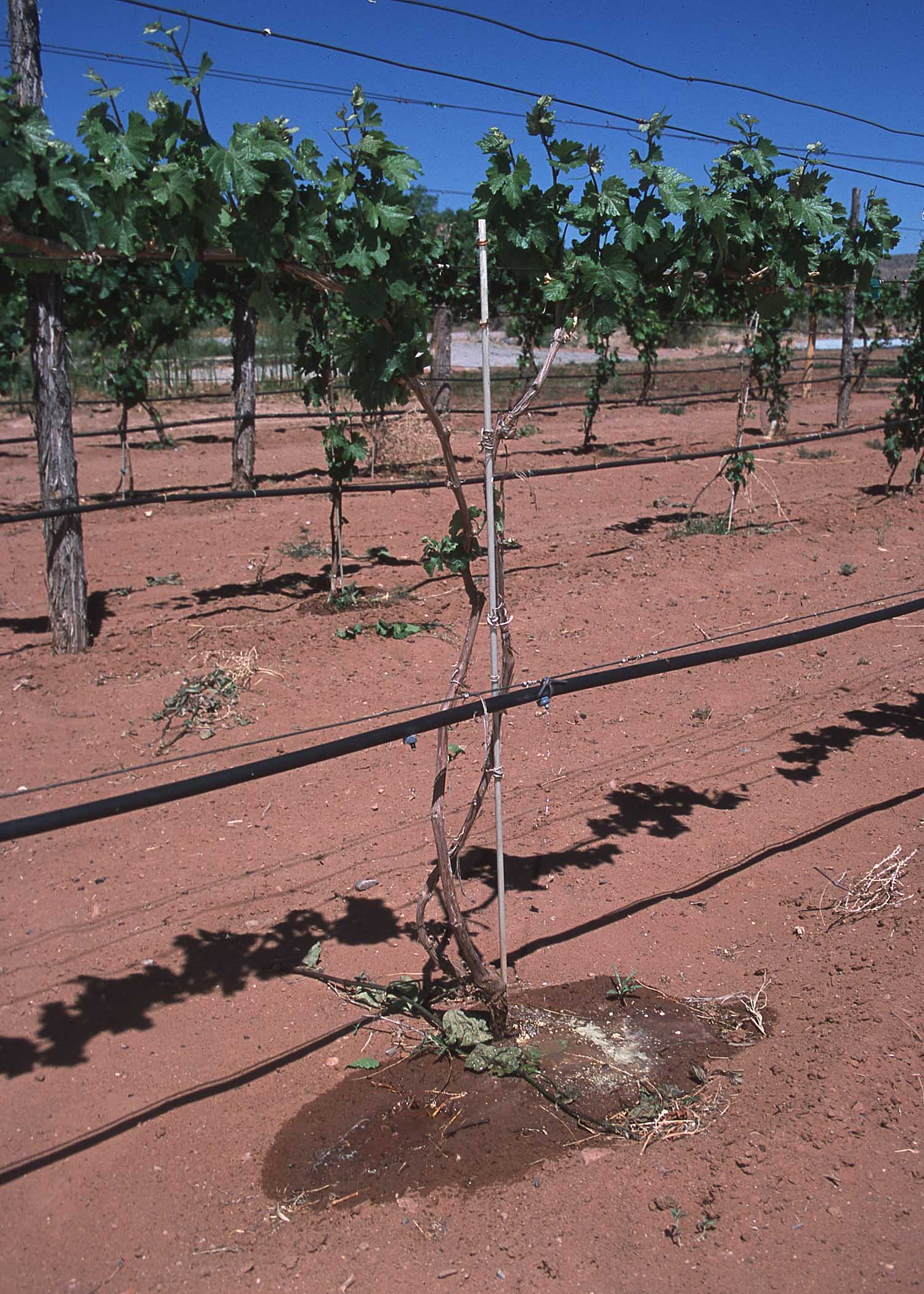
Vineyard roots and wetting patterns depend on soil, vine age, rootstock, row management and emitter arrangement. Place sensors in a position that reflects the intended irrigation treatment and document the distance from emitters and vines. Multiple depths can distinguish upper-layer drying from deeper replenishment. Do not assume the wettest point immediately below a dripper describes the complete rooted volume. Record irrigation events and follow the subsequent drying pattern alongside crop observations. Our irrigation guide explains how these measurements contribute to timing and amount without imposing one universal threshold on every vineyard.
Orchards: account for a larger wetting pattern
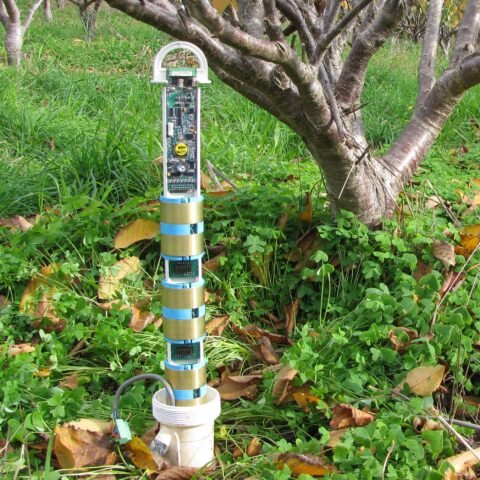
Tree crops may have broad or uneven root distributions, and the wetting pattern differs between drip and micro-sprinkler irrigation. A placement suitable for one emitter arrangement may misrepresent another. Select depths from the active roots and profile rather than copying a neighbouring orchard’s installation. Consider separate locations where soil, slope or irrigation uniformity changes materially. Compare the response after an irrigation event with the expected wetted area, including deeper measurements where useful. If a tree appears stressed while the sensor remains wet, investigate the position, rooting and chemical conditions before assuming the irrigation schedule alone explains the problem.
Vegetables and annual crops: plan for operations
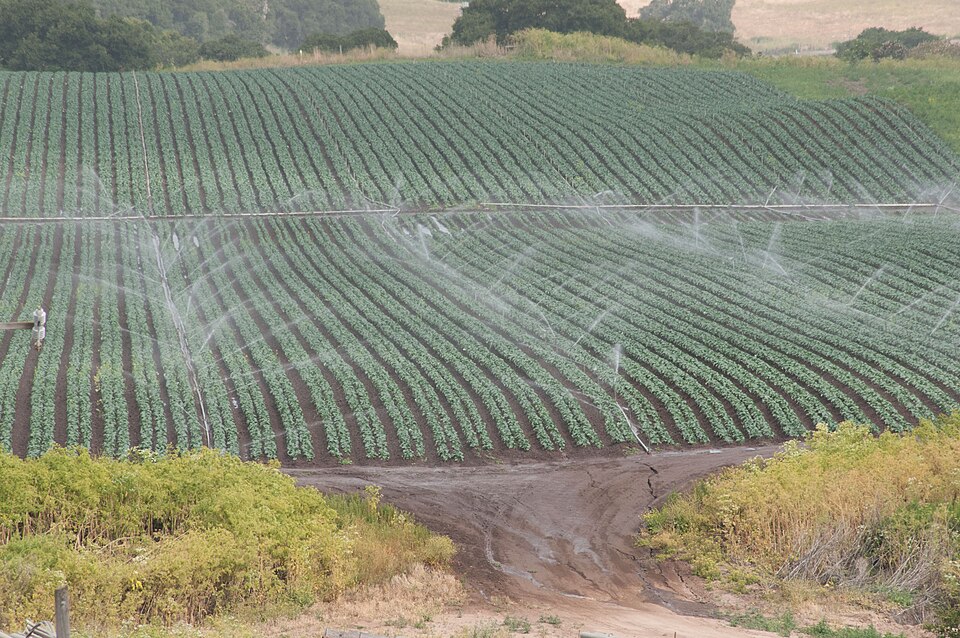
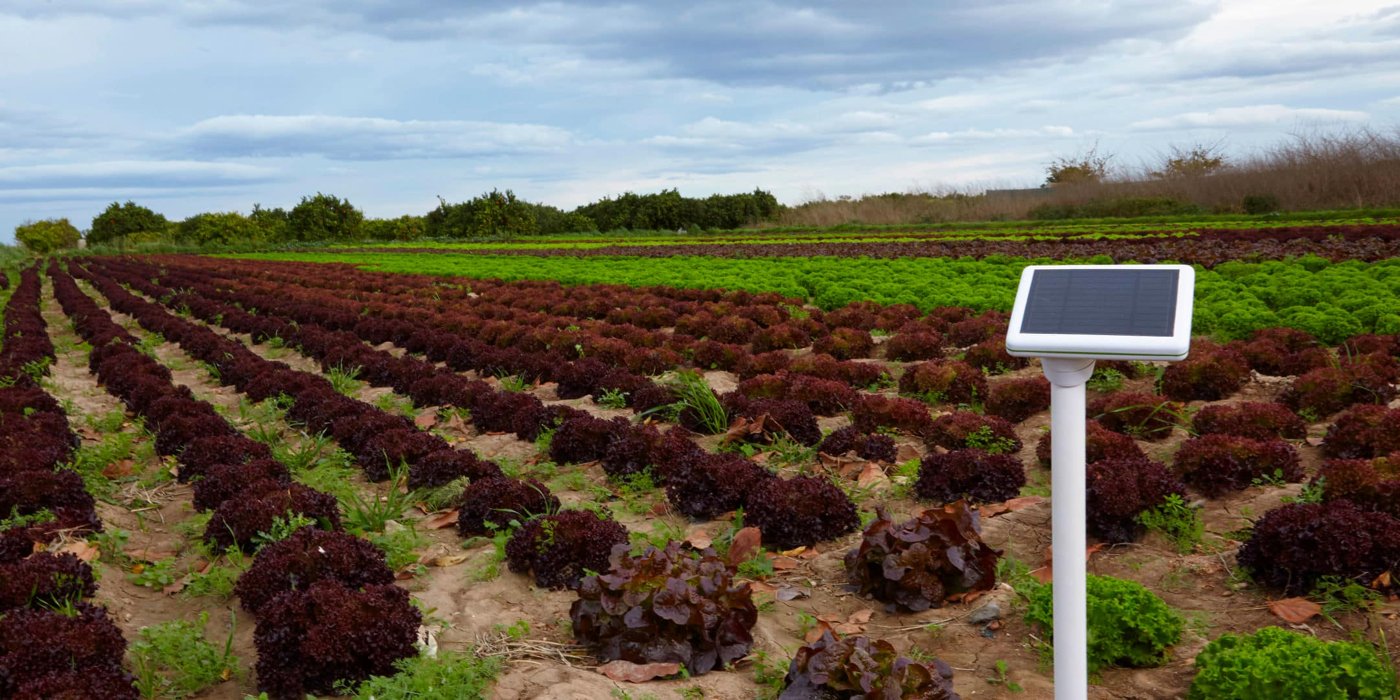
Annual crops introduce changes in planting position, rooting and machinery traffic. Sensor placement should survive routine operations while continuing to represent the crop. Check whether transplant establishment and mature growth need different depths or interpretation. Following cultivation or reinstallation, confirm contact and document any movement of the measurement point. Short crop cycles can make delayed data less useful, so select an update interval that supports the actual irrigation response. For sprinkler-irrigated fields, assess application uniformity and soil zones before relying on one probe. Monitoring complements distribution checks and field observations; it cannot repair uneven water delivery through interpretation alone.
Greenhouses: distinguish soil from substrate
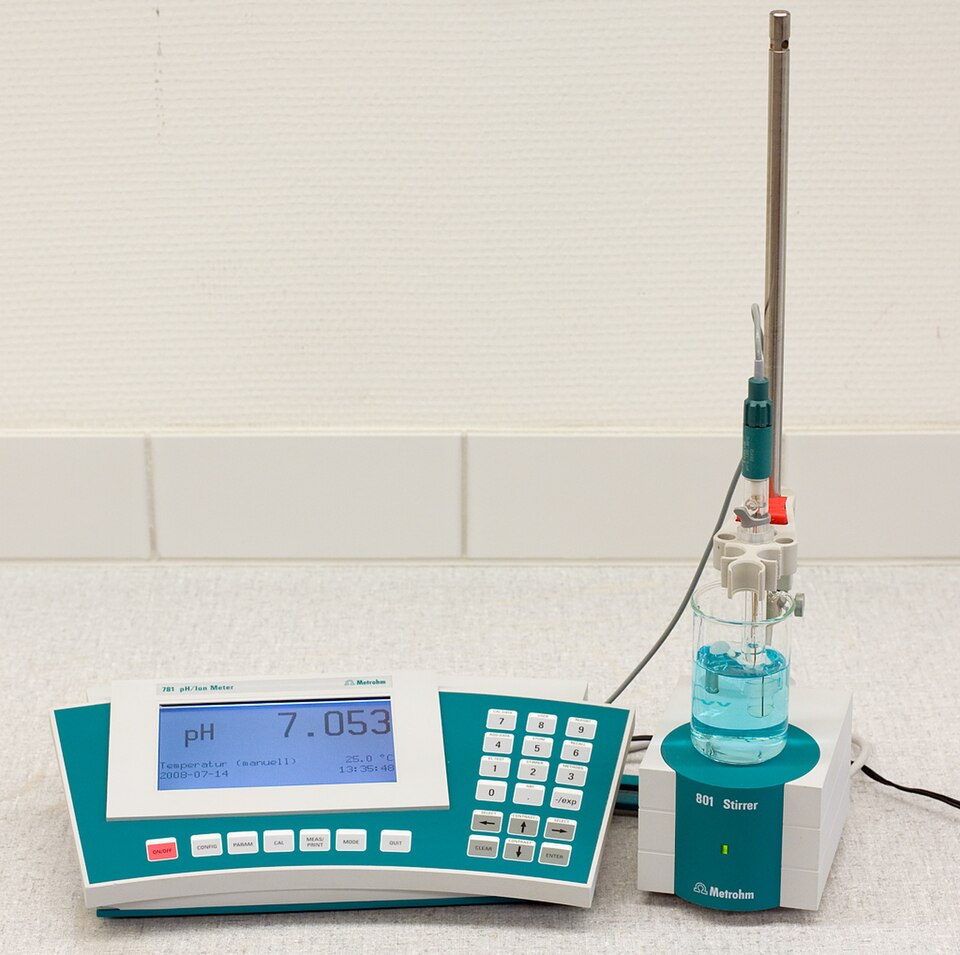
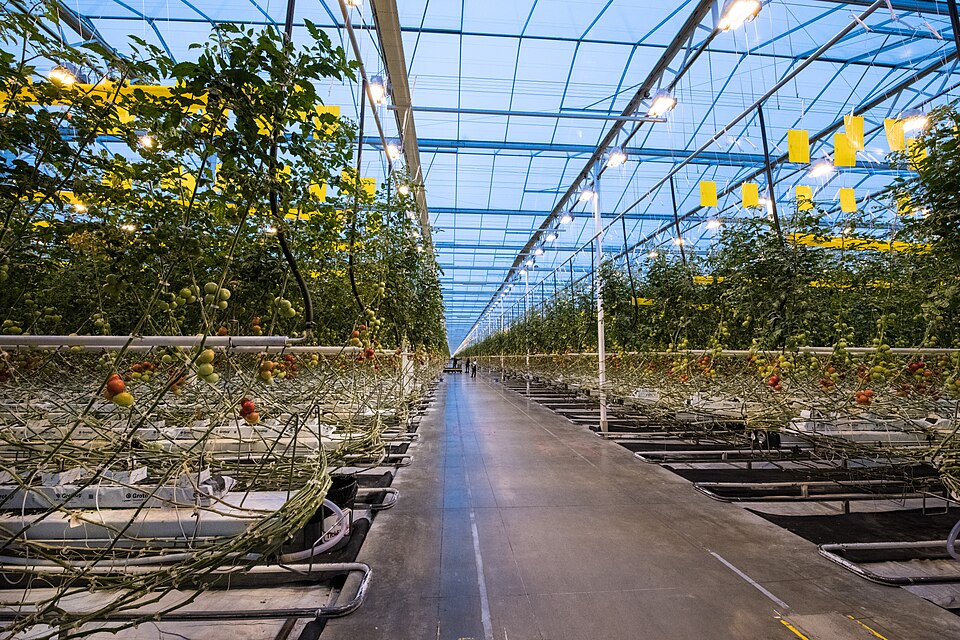
A greenhouse may contain mineral soil, containers or engineered substrates with very different retention and drainage behaviour. Use a calibration and measurement method appropriate to the material. Container geometry, emitter location and drainage influence the volume represented by a sensor. Irrigation-water and drainage-solution EC tests also describe different conditions from bulk sensor EC, so retain their method labels. Laboratory or solution pH testing may answer chemical questions outside a moisture instrument’s capabilities. Follow the crop and substrate management approach when setting triggers, and examine irrigation frequency as well as individual event volume.
Select a complete field system
After defining placement and measurements, assess power, communication, mounting and data access. Verify radio or cellular coverage at the installation locations, including difficult terrain or structures. Decide how missed readings, low power and implausible values will be noticed. A second depth adds interpretation only when staff understand what it represents. Combine continuous measurements with periodic sampling for questions such as pH or nutrient status. Use the sensor types guide to choose complementary quantities, then compare complete systems. Record the operating procedure so the network continues to inform decisions when staff or seasons change.
Common questions
How many sensors does a farm need?
The number depends on management zones, soil variation and irrigation layout. Test representative locations first, then expand where another measurement supports a distinct decision.
What should I record when comparing readings?
Keep the date, sensor model, depth, location, measurement units and calibration with the reading. Record irrigation and sampling methods where relevant so that later comparisons describe the same quantity and field conditions.
Apply this to your monitoring plan
The practical crop guides lead to field actions; research articles explain larger environmental questions.
- Why farms adopt connected soil sensors
- Agricultural IoT connectivity: cellular, LoRaWAN, Wi-Fi and satellite
- SMAP satellite soil moisture: useful context beyond a field probe
- NOAA soil moisture observing networks: lessons for field monitoring
- Fire, soil insulation and permafrost: lessons from Alaska
- ENSO and cave drip water: interpreting a seven-year record