What matric potential measures
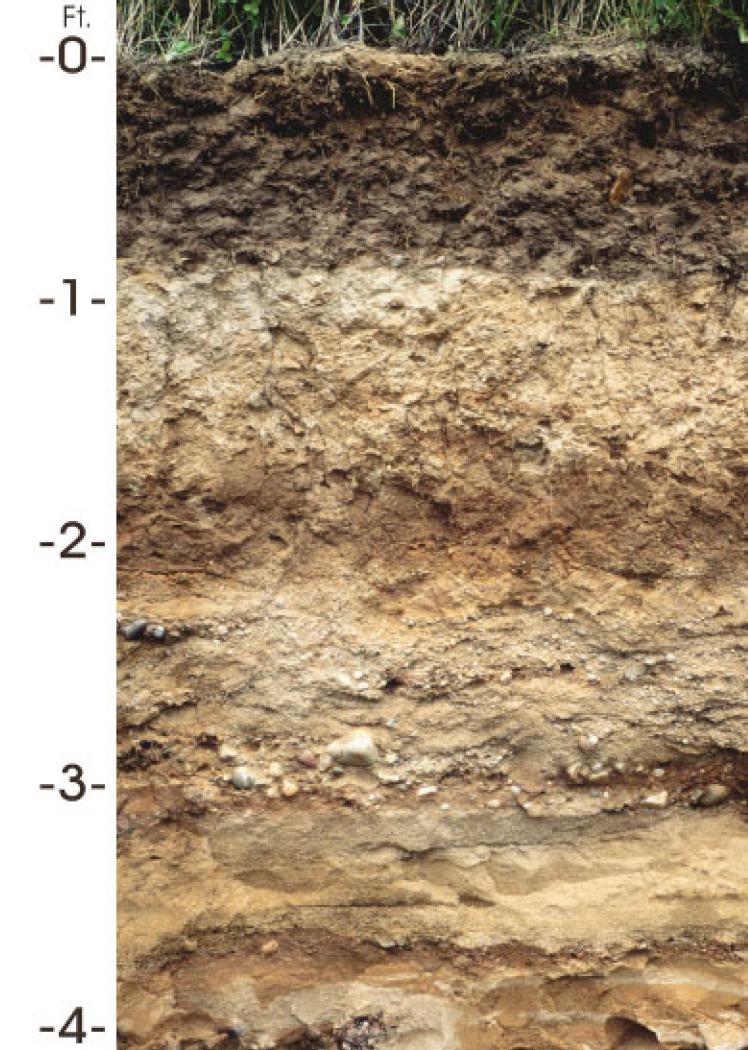
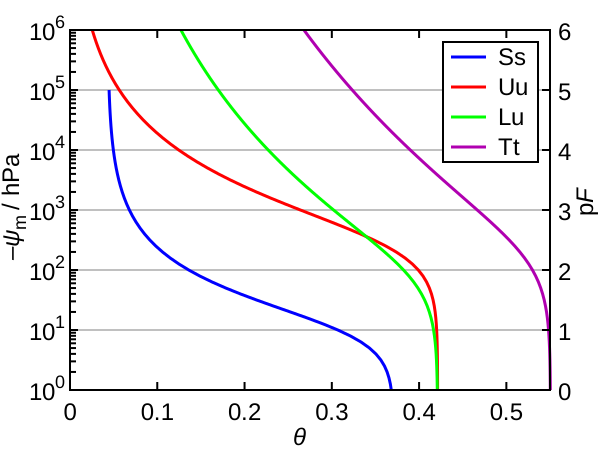
Water in unsaturated soil is held by interactions with particle surfaces and by capillary forces within pores. Matric potential describes the associated reduction in water potential relative to a reference state. As the soil dries, the remaining water is generally held more tightly and matric potential becomes more negative. Volumetric water content answers how much water occupies the soil volume; matric potential describes one part of the energy state of that water. The same water content can correspond to different matric potentials in a sandy soil and a clay soil. Reading both measurements together can therefore improve interpretation of the root zone.
Potential, tension and units
Instruments may display matric potential as a negative pressure or suction as a positive magnitude. A potential of −40 kPa and a tension magnitude of 40 kPa can describe the same condition under these conventions. Verify the sign convention before programming alerts. Kilopascals and centibars have the same numerical magnitude, while one bar equals 100 kPa. Some retention curves use pF, defined as the base-ten logarithm of suction head expressed in centimetres of water. It is not the logarithm of pressure stated in arbitrary units. Label exported data with the quantity and units so graphs remain interpretable.
Connect tension with water content
A water retention curve relates water content to matric potential for a particular soil. Texture, structure, density and organic matter shape the relationship. Wetting and drying can follow different paths, a behaviour called hysteresis. Consequently, a single generic conversion from tension to water content can misrepresent the water available in a field. A measured curve or a locally validated approximation is more useful when estimating storage. Our soil properties guide explains the physical context. Compare readings from the same layer and record whether the profile is wetting after irrigation or drying through root uptake.
Choose a measurement range
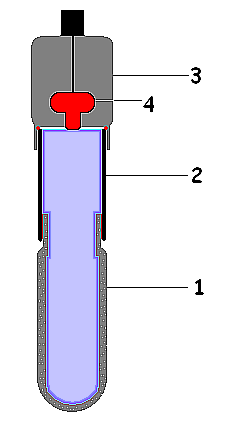
A tensiometer contains water in a tube connected to a porous cup that exchanges water with the surrounding soil. A pressure measurement indicates the tension in the connected water. Reliable contact and a maintained water column are essential. Conventional water-filled tensiometers have a limited dry-range response because cavitation and air entry can interrupt measurement. Other instruments infer matric potential from a porous material whose response has been calibrated, and their operating ranges differ. Check response time, temperature correction, salinity sensitivity and maintenance for the actual model. A device that suits a frequently irrigated substrate may not suit a much drier field soil.
Set a site-specific irrigation trigger
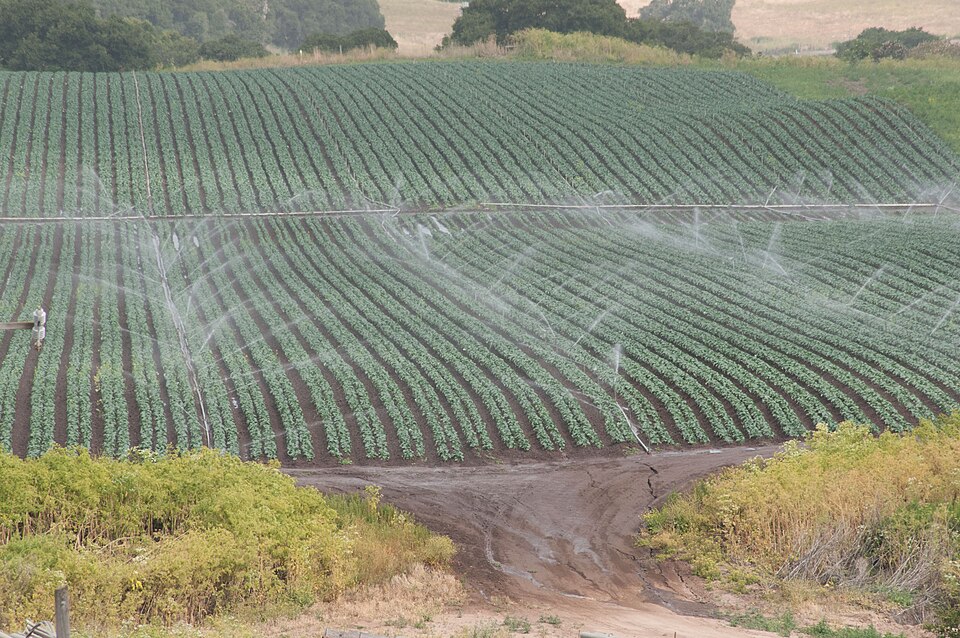
A trigger must reflect the crop, growth stage, rooting depth, soil and irrigation capacity. Published values can provide a starting point when their conditions match, but a universal tension threshold is inappropriate. Observe crop condition and the daily drying pattern while validating the trigger locally. Place monitoring where active roots experience the irrigation treatment, with additional depths when they answer a separate question about penetration or drainage. After watering, inspect how quickly readings recover and how the response differs by depth. Our irrigation scheduling guide connects these observations with irrigation timing and amount.
Account for the other parts of water potential
Matric potential is one component of total water potential. Osmotic effects from dissolved salts also influence the energy state of soil water and plant uptake. A favourable tension reading therefore cannot rule out salinity stress. Gravity matters when comparing water at different elevations, and pressure becomes relevant in saturated conditions. Consider water quality and electrical conductivity alongside matric measurements when salinity is a management concern. Preserve the distinction between what the instrument senses and the wider plant environment. Combining complementary observations supports better decisions than interpreting a single number as a complete measure of crop water status.
Common questions
Can tension alone reveal salinity stress?
No. Matric measurements describe capillary and surface effects. Osmotic effects from dissolved salts require additional context and suitable chemical measurements.
What should I record when comparing readings?
Keep the date, sensor model, depth, location, measurement units and calibration with the reading. Record irrigation and sampling methods where relevant so that later comparisons describe the same quantity and field conditions.
Apply this to your monitoring plan
Choose between water tension and water amount using the soil retention relationship.