What calibration changes
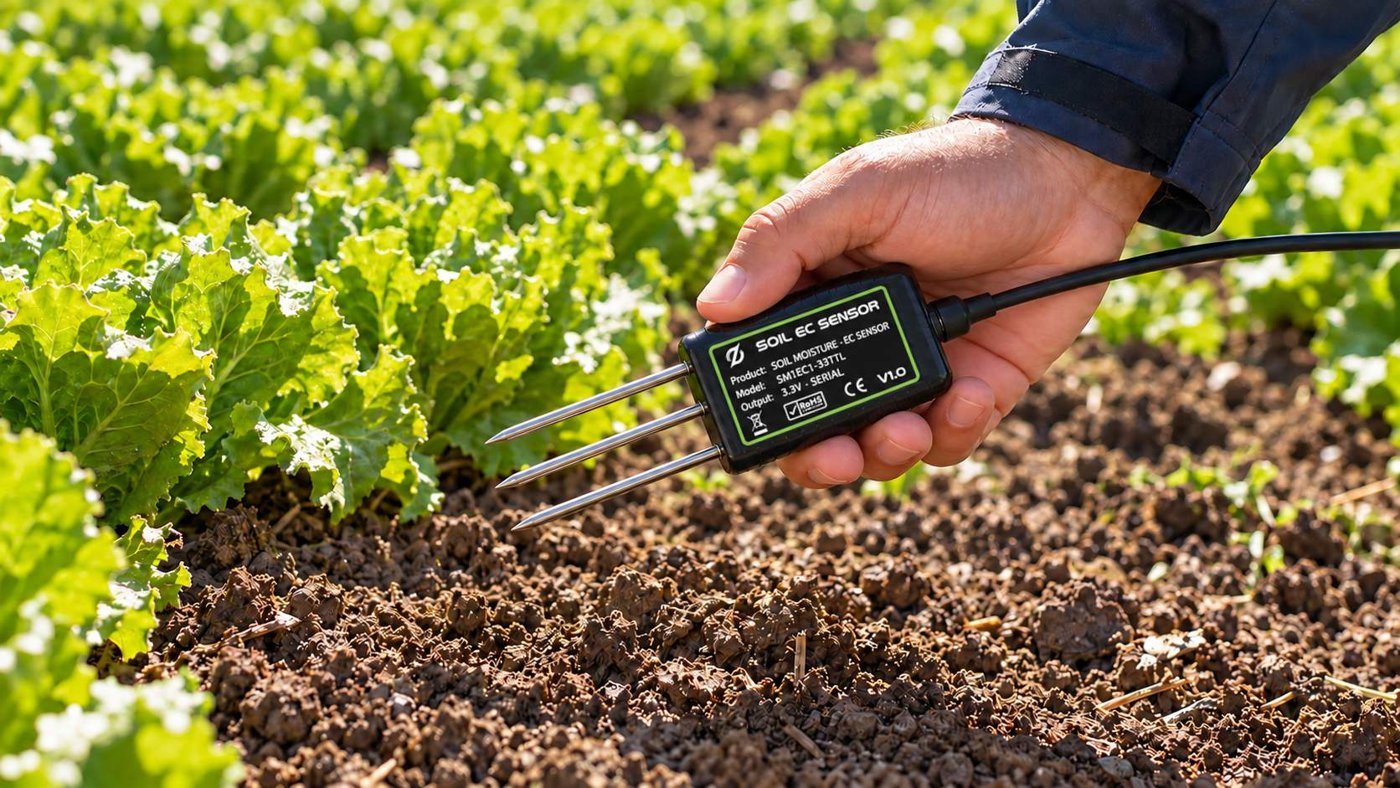
A water content sensor usually converts an electrical response into an estimate of volumetric water content. Calibration establishes that relationship using reference measurements. A factory equation can be suitable for its documented soil conditions; a soil-specific equation can improve agreement where the actual material behaves differently.
Calibration is distinct from choosing an irrigation trigger. The calibration asks whether a displayed percentage represents water content adequately. The trigger asks when the crop should receive water. Good irrigation management needs both questions addressed, even when the daily decision mainly follows a repeatable drying trend.
Soil texture, density, salinity, temperature and sensor construction can affect the relationship. Organic substrates or unusual mineral soils may need an approach different from a general mineral-soil calibration. Check the manufacturer's guidance before applying a correction.
Check installation before changing the equation
An air gap, a disturbed sensing zone or poor contact can create readings that a numerical correction will not reliably repair. Inspect the location, orientation, depth and cable or logger configuration first. Confirm that the output is being interpreted in the intended units.
Compare neighbouring sensors only when they are monitoring comparable conditions. Two probes under different parts of a drip wetting pattern may disagree because the soil is genuinely different. A stable difference between sensors in a controlled, shared material is a more useful reason to investigate sensor variation.
Record the sensor model, serial number, installation method and firmware or logger settings with the observations. This record helps distinguish a soil effect from a later equipment or configuration change.
Connect gravimetric and volumetric measurements
A reference soil sample is weighed wet and after an appropriate drying procedure. The mass lost represents water removed. Gravimetric water content is water mass divided by dry soil mass:
Converting it to volumetric water content requires the dry bulk density of the soil and the density of water, expressed in compatible units:
For example, 125 g of wet soil that becomes 100 g after drying contains 25 g of water. Gravimetric water content is 0.25 g/g. If the representative dry bulk density is 1.20 g/cm³ and water density is approximated as 1.00 g/cm³, estimated volumetric water content is 0.25 × 1.20 = 0.30 m³/m³, or 30%.
The bulk density must describe the same material and packing condition as the calibration. Use an appropriate laboratory procedure and representative samples. A disturbed handful with an assumed density can introduce error into the reference measurement itself.
Build and validate a calibration
- Define the working range. Include moisture conditions expected between irrigation events, rather than only one wet point.
- Prepare representative material. Match the soil or substrate, density and salinity conditions that matter to the installation.
- Collect paired observations. Record the sensor output and independent reference water content after conditions have equilibrated.
- Repeat across moisture levels. Keep enough observations to assess variation and the shape of the response.
- Fit a documented relationship. Use the manufacturer's supported procedure or an appropriate calibration method.
- Validate independently. Check observations that were not used to fit the relationship.
A one-point adjustment can correct an offset at that point, but it cannot establish the response across a full wet-to-dry range. Avoid extrapolating the fitted relationship beyond the conditions tested.
Report the remaining error in useful units. A difference between 20% and 22% water content is two percentage points. It is not the same as a 2% relative error. Distinguishing those terms helps when comparing specifications and calculating a water deficit.
Use the result in the field
Store the equation with the sensor and soil records. Check whether the correction is applied in the sensor, logger or analysis software so it is not applied twice. Preserve the original output when practical so later checks can reconstruct how a displayed value was produced.
Recheck the relationship when the growing material, installation or instrument changes significantly. A successful calibration in one soil does not automatically establish performance in another. The required level of checking should reflect how strongly the management decision depends on an absolute water content value.
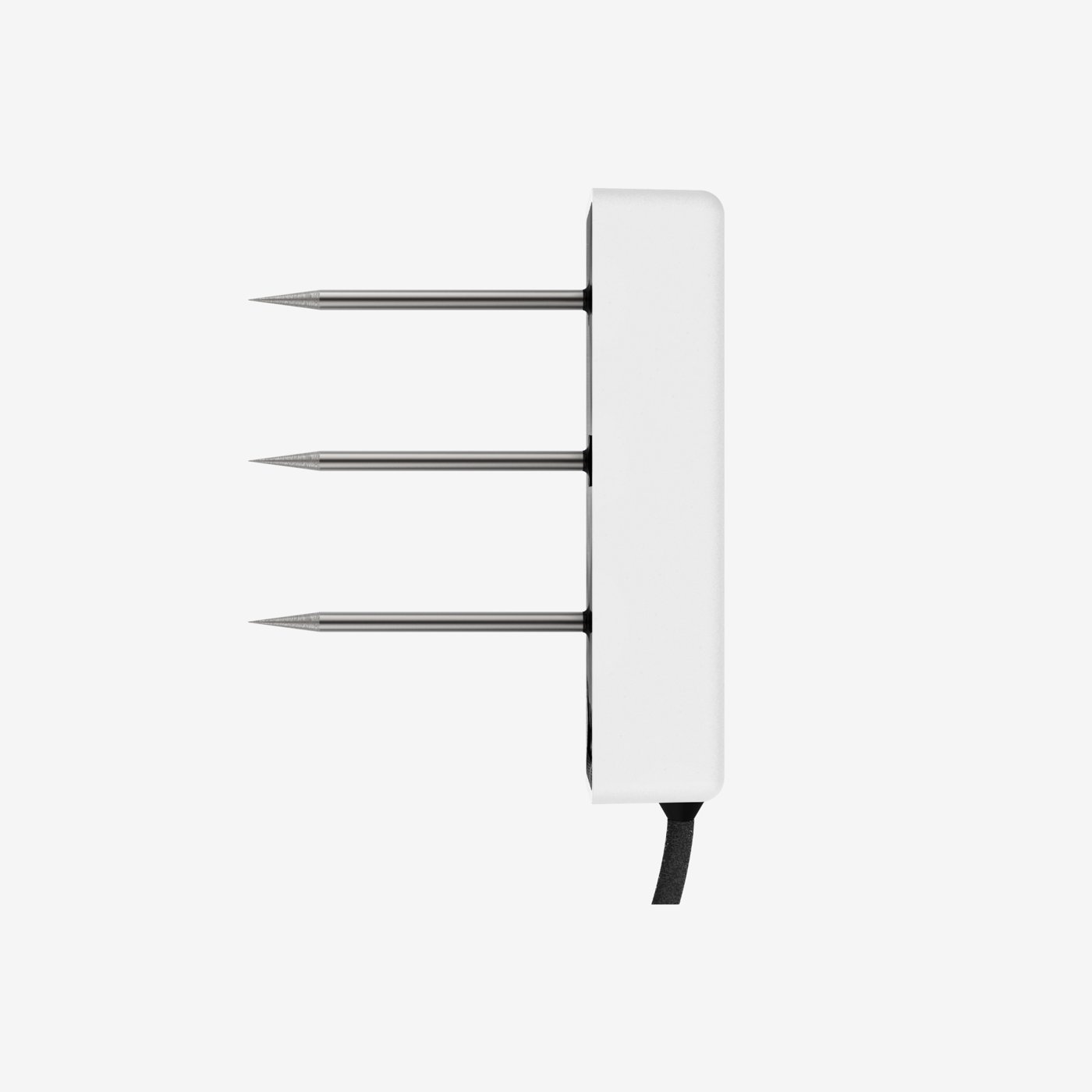
For a wired sensor, confirm that its logger supports the required output and conversion. The TEROS 12 review and Pycno Mini review describe their listed interfaces. Continue with the irrigation guide to relate verified readings to storage and refill decisions.
Common calibration questions
Does every sensor require its own soil-specific calibration?
Not automatically. Start with the documented factory calibration and your accuracy requirement. Validate a representative sample of instruments and conditions; individual calibration is useful where sensor variation or measurement precision justifies it.
Can I use air and water readings as the whole calibration?
They can help check operation when the manufacturer supports that procedure, but they do not alone establish accuracy in the soil matrix. Validate the conversion in representative soil across the intended moisture range.
Apply this to your monitoring plan
Calibration depends on the material and a reference measurement that matches the sensing region.