Define the vineyard decision first
Vineyard water management depends on production goals, cultivar, rootstock, soil, climate and growth stage. A soil sensor can show the timing and distribution of water around the roots, but it does not directly measure vine water status or predict fruit quality. Use the record alongside crop observations and locally appropriate plant measurements when those are part of the management programme.
Choose a specific question: whether an irrigation event reaches the lower active roots, whether a shallow layer is drying too quickly, or whether two soil zones require different timing. This makes it easier to select stations and interpret their traces. A continuous graph becomes less useful when its expected action is left undefined or when a moisture percentage is copied from a vineyard with different soils.
Represent the row, emitter and soil zone
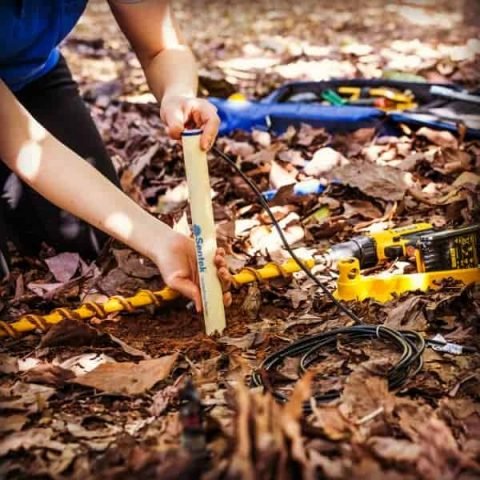
Drip irrigated vineyards can have substantial differences between the wetted row and the drier inter-row. Place a station in the part of the root zone that represents the irrigation decision, recording its distance from an emitter and vine. Avoid an exceptionally wet spot, a leaking dripper or a compacted access track unless that is deliberately the condition being investigated.
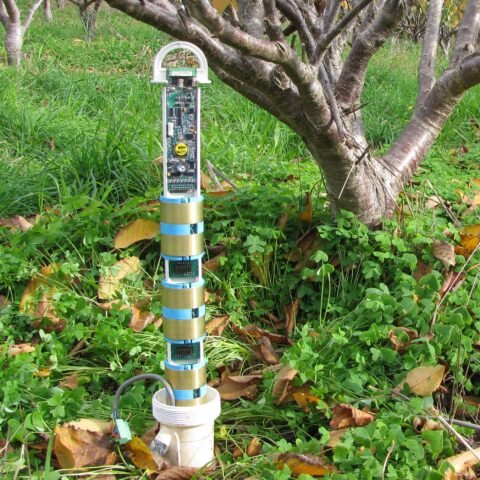
Use a profile inspection to establish active roots, contrasting layers and any restriction. Several sensing depths help separate upper root-zone changes from deeper storage and drainage. A profile body or separate point probes can supply that layout; the correct choice depends on the required depths and installation conditions, rather than the crop name alone.
Read the response to each irrigation event
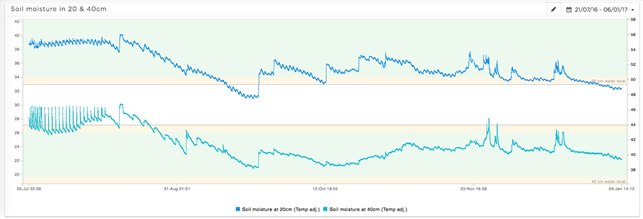
A shallow response followed later by a deeper one can show a wetting front moving through the monitored profile. If deeper levels remain unresponsive, investigate event duration, wetting geometry, contact and root distribution before assuming the vineyard simply needs more water. If water repeatedly moves below the productive roots, examine whether duration or delivery is excessive for the local conditions.
Dry down between events reflects water uptake and other losses, with different layers contributing at different stages. Use graph interpretation to compare similar weather and crop periods. Rainfall can wet areas beyond the normal drip zone, so the same station may represent a different proportion of the accessible water after rain than during a long dry period.
Keep the readings accessible and actionable
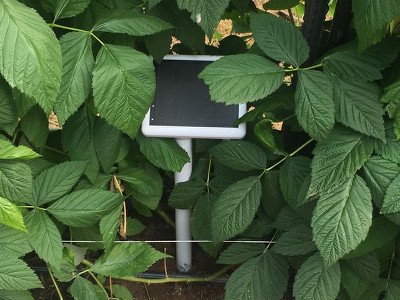
A remote block needs a dependable data route and power arrangement. Pycno Terra can be worth considering where integrated profile sensing and a Master’s communication role simplify a new installation. Terra Nodes use a compatible Master, so include those network roles in the plan. Compare the complete system with an existing wired logger before assuming either arrangement is cheaper or easier.
Assign responsibility for reviewing trends, inspecting missing data and checking the irrigation hardware. Record management changes so a different trace can be related to a changed event rather than attributed automatically to weather. The installation guide and system comparison provide the next steps. Soil monitoring supports the vineyard’s water strategy when a representative reading reaches somebody who can act on it in time.