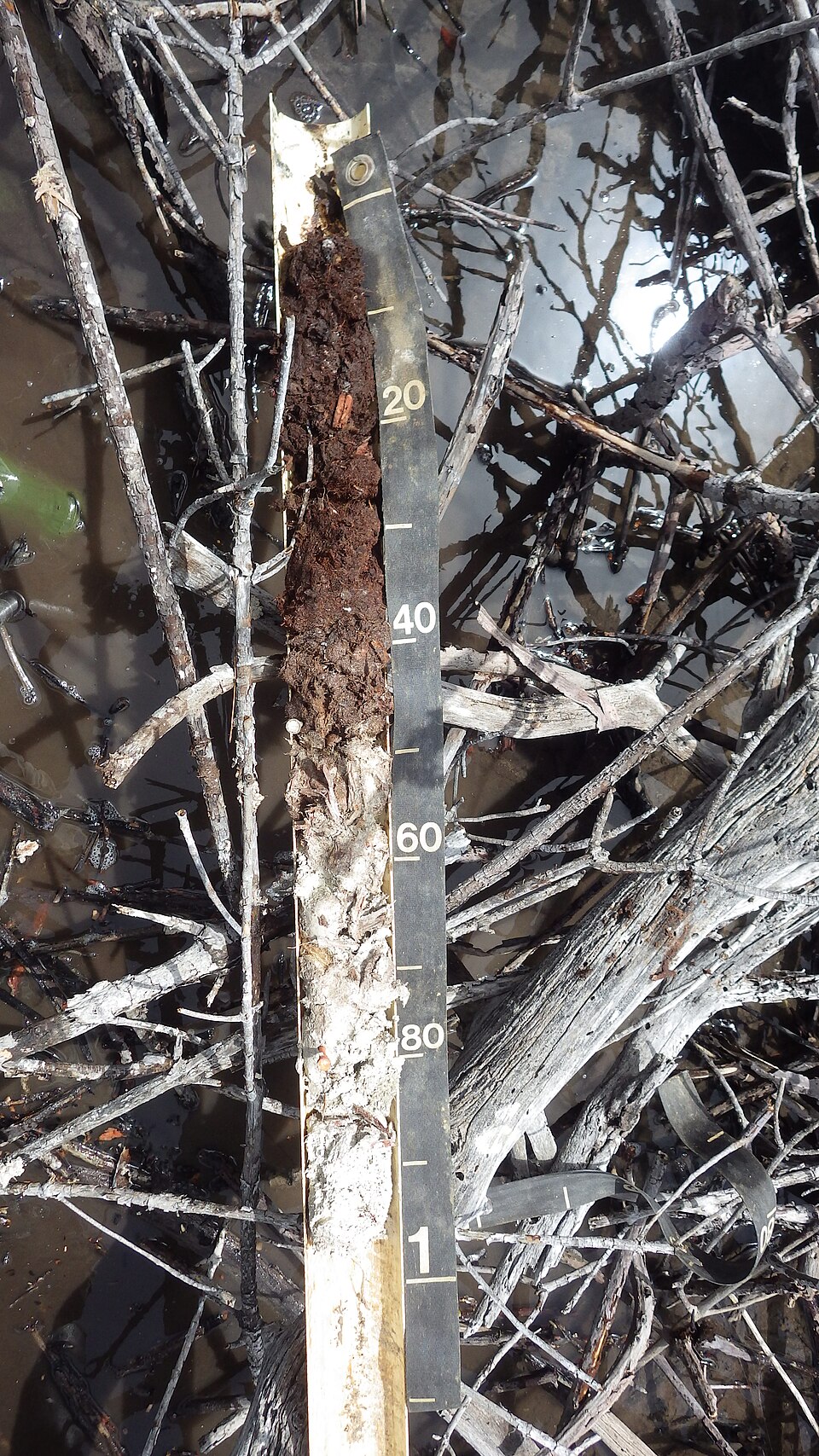
Two reference limits for a soil water budget
Field capacity describes a soil water condition after substantial drainage following wetting, with the practical definition depending on soil and measurement method. Permanent wilting point is a reference lower limit associated with water that plants cannot readily extract under the specified conditions. Their difference is often used to estimate total available water. These are useful reference concepts, not perfectly sharp switches in a living field.
A clay and a sand may have different water contents at both limits. Clay can hold more water while also retaining a larger portion tightly. Organic matter, structure, compaction and stones alter the practical storage and rooting environment. A sensor displaying thirty percent moisture therefore cannot establish plant available water without a relationship appropriate to the surrounding soil.
Convert a moisture difference into millimetres
For a reasonably uniform layer, a volumetric water content difference multiplied by layer thickness gives an equivalent water depth. If field capacity is 0.30 cubic metres per cubic metre and current water content is 0.22 across a 300 millimetre layer, estimated depletion is (0.30 − 0.22) × 300 = 24 millimetres. This estimate assumes that the stated water contents represent the full layer.
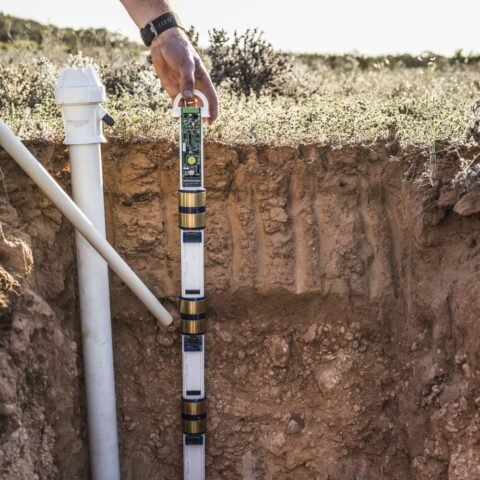
For a layered profile, calculate each relevant layer separately and add the water depths. Use the effective root depth rather than an assumed maximum rooting depth from a crop table. Where a drip system wets only part of the ground, translating local sensor readings into a field wide water volume requires additional care. A reading inside the wettest part of the bulb may overstate the storage accessible across the managed area.
Choose a management depletion before stress
Readily available water is the portion of total available water that can be depleted before unacceptable stress under the management conditions. FAO guidance links this concept to the crop and evaporative demand. The acceptable depletion fraction is not fixed for every crop, growth stage or weather condition. Sensitive stages and high demand can justify a more conservative operating range.
Select a preliminary trigger using local agronomic guidance and soil observations, then verify it through several irrigation cycles. Check whether the crop remains within the intended condition and whether applied water reaches the active lower roots without excessive drainage. Water tension can provide complementary evidence where an absolute moisture calibration is uncertain. Read matric potential alongside the volumetric water budget.
Build the operating range from the field
After a substantial wetting event, watch the profile drain and identify a repeatable upper reference under your site conditions. Do not automatically label the highest reading as field capacity: it may represent temporary saturation or preferential water movement. Relate the drying trend to roots, weather and crop condition, and keep track of whether the installed level represents an entire layer or a small local volume.
Use graph interpretation to separate wetting, drainage and depletion. Compare contrasting textures when setting irrigation duration and frequency. A connected system helps keep the trends available, but the management threshold still comes from the soil, crop and effective root zone. Revisit it when root depth, crop stage or irrigation distribution changes.