Define the question for each sensor
An installation should answer a management question: whether upper roots are drying, whether water reaches deeper roots or whether an application causes deeper movement. Those questions require different sensing positions. Decide which crop area and soil zone the installation represents before choosing a convenient mounting location. Record the irrigation method and expected wetting area, including the distance from the emitter or sprinkler pattern.
One probe in an unusually wet pocket cannot represent every part of a block. Use soil observations, crop performance and irrigation uniformity to identify zones that may need separate monitoring. Our applications guide provides the broad crop context; placement should then reflect the actual field.
Match depths to roots and horizons
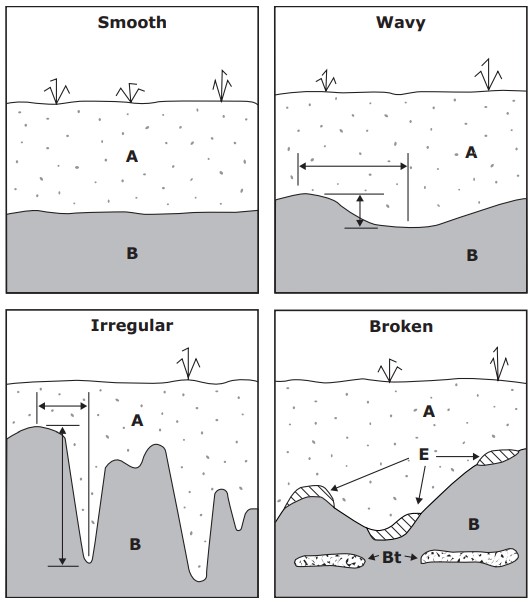
Inspect the rooted profile and note changes in texture, structure and visible rooting. An upper-root measurement can show faster drying, while a deeper-root measurement can show replenishment and later uptake. A position below most roots can provide a separate indication of deeper water movement. No standard pair of depths suits every crop and soil.
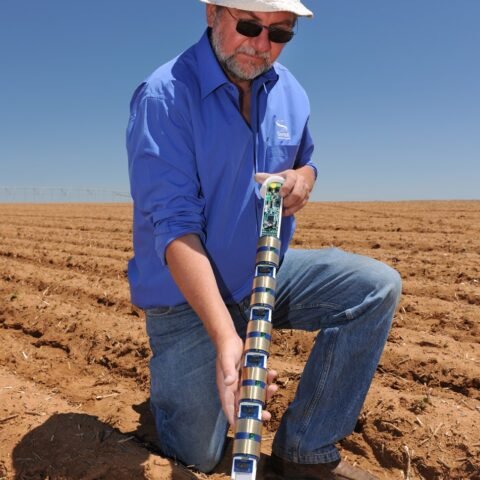
A fixed-spacing profile probe may place some elements near layer boundaries. A point-probe array gives more freedom to choose individual positions. Check the represented volume and whether the element crosses a transition. Use horizon descriptions and the geometry comparison when deciding how to implement the layout.
Follow the instrument-specific contact procedure
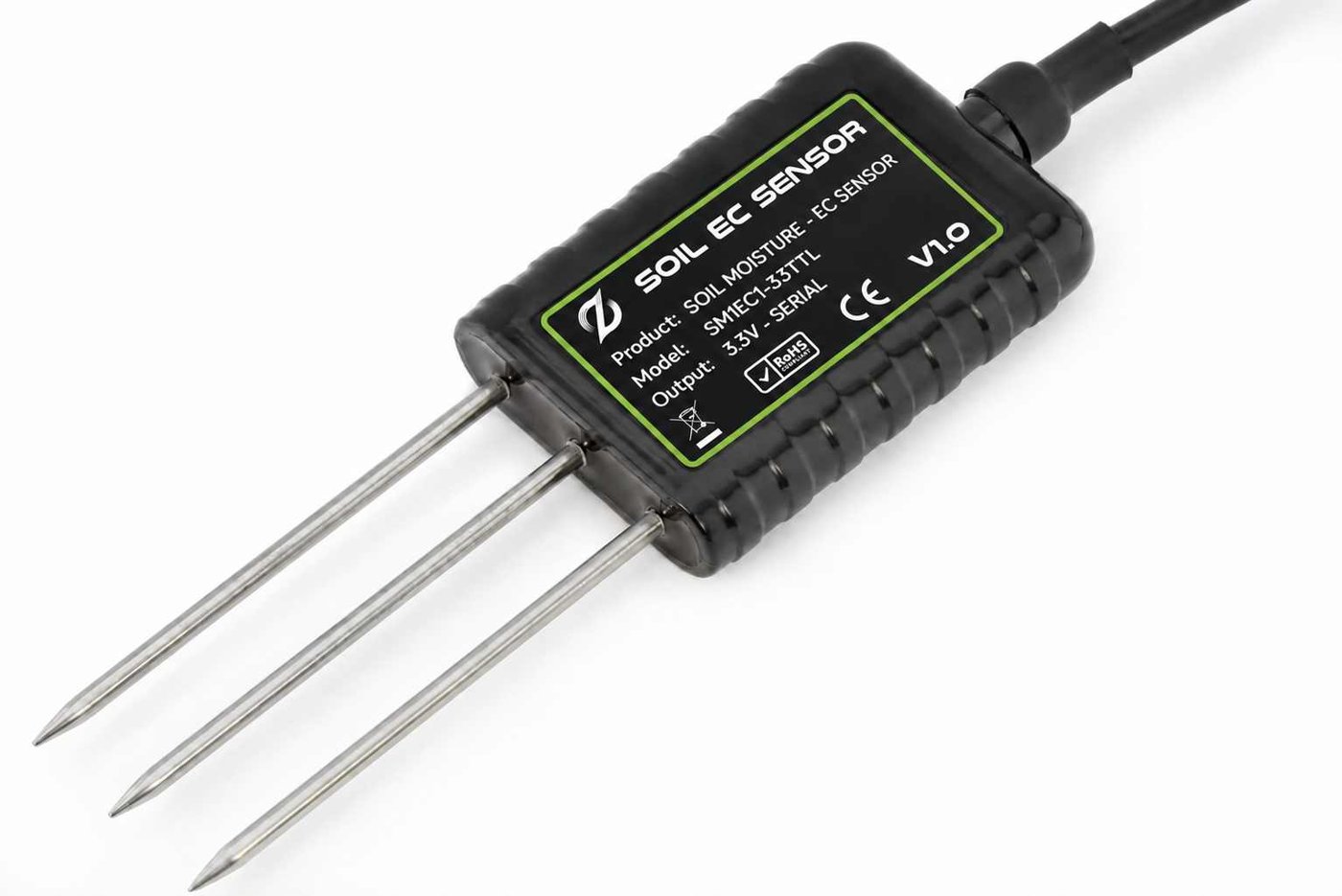
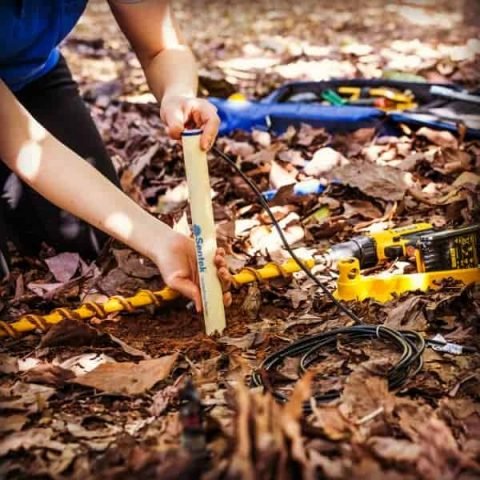
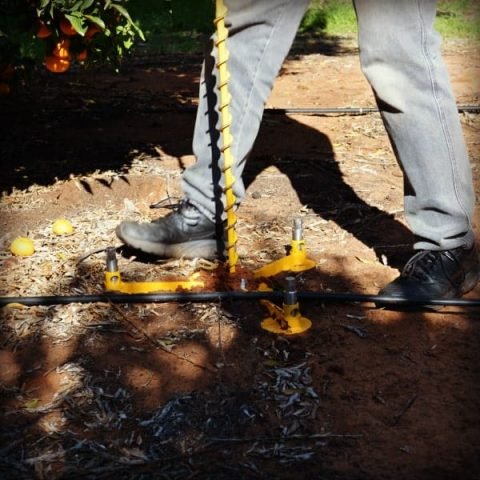
Dielectric measurements are sensitive to the material immediately around the sensing region. Air gaps, loose backfill and excessive disturbance can bias a reading. Access tubes need the specified fit and contact with surrounding material. Prongs need contact along their active length. Use the installation tool and procedure appropriate to the exact model rather than treating all probes as interchangeable.
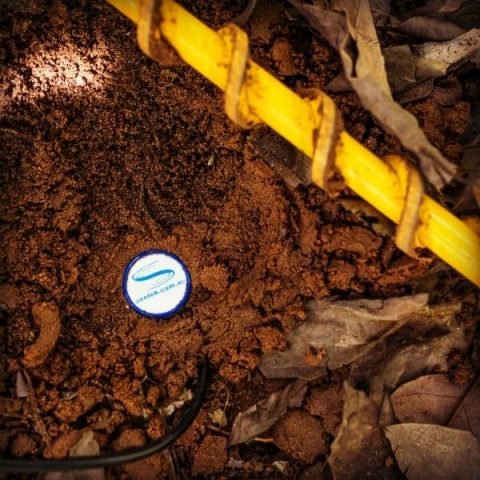
Consider stones, hard layers and wet smearing before preparing a hole. A slurry technique may be specified for one product and unsuitable for another. Preserve the natural structure as far as the approved procedure permits. When installation becomes difficult, record what changed and check the resulting response instead of assuming that a neat surface appearance proves good contact.
Protect the complete field system
Route cables so machinery, animals and routine crop operations do not damage them. Avoid unsupported connector exposure and unintended strain on the sensing body. Place antennas, enclosures and power components where they remain serviceable. Confirm the protocol, electrical supply and acquisition inputs before sealing the installation.
Integrated Pycno Terra Masters reduce the number of separately assembled logging, power and cellular components. Nodes still need a compatible Master, and its coverage must be tested at the selected locations. A wired system needs its full logger or RTU route checked as part of commissioning.
Commission against actual wetting and drying
Check timestamps, units, depth labels and the selected calibration. Observe an irrigation or rainfall response, then follow drying at each depth. Compare the sequence with the irrigation pattern and profile description. A sudden deep response can result from preferential flow and does not prove that every layer above it is uniformly replenished.
Keep installation photographs, coordinates or location notes, serial numbers and a sketch of the layout. Recheck readings after cultivation or sensor movement. Where absolute water-content accuracy matters, follow the reference-check procedure. Installation records make later troubleshooting and replacement much more reliable.
Common questions
Should the sensor sit directly below a dripper?
Choose a position that represents the intended rooted and wetted volume. The wettest spot alone may overstate conditions elsewhere.
Can I reuse the same hole for another probe?
Only when its geometry and the specified contact procedure are suitable. Different bodies and electrodes require different preparation.