Start with the sensing layout
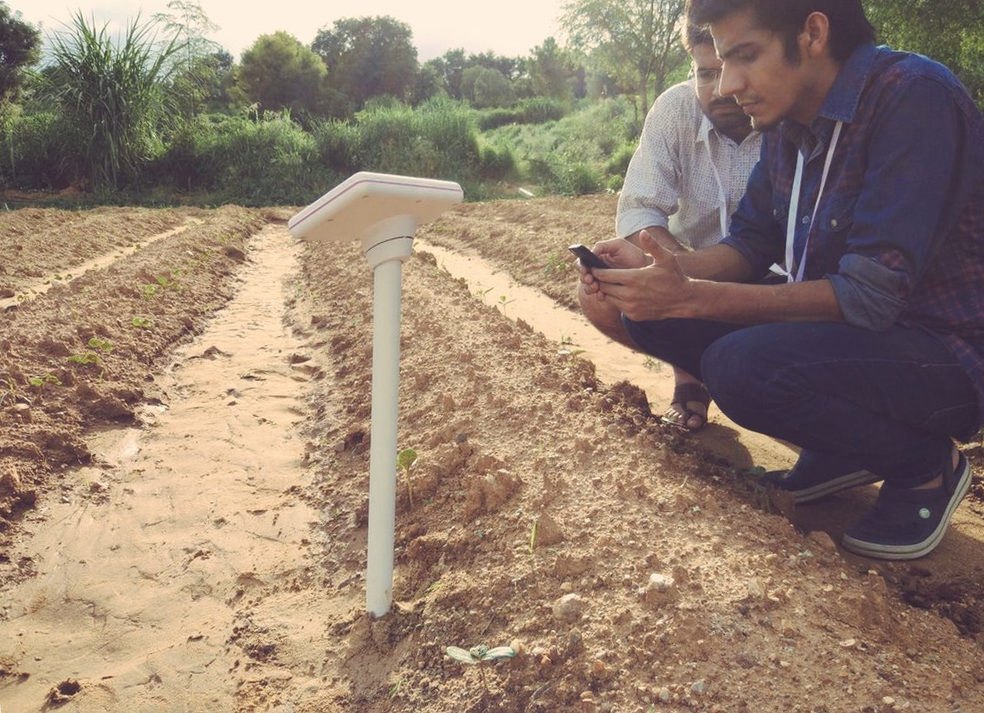
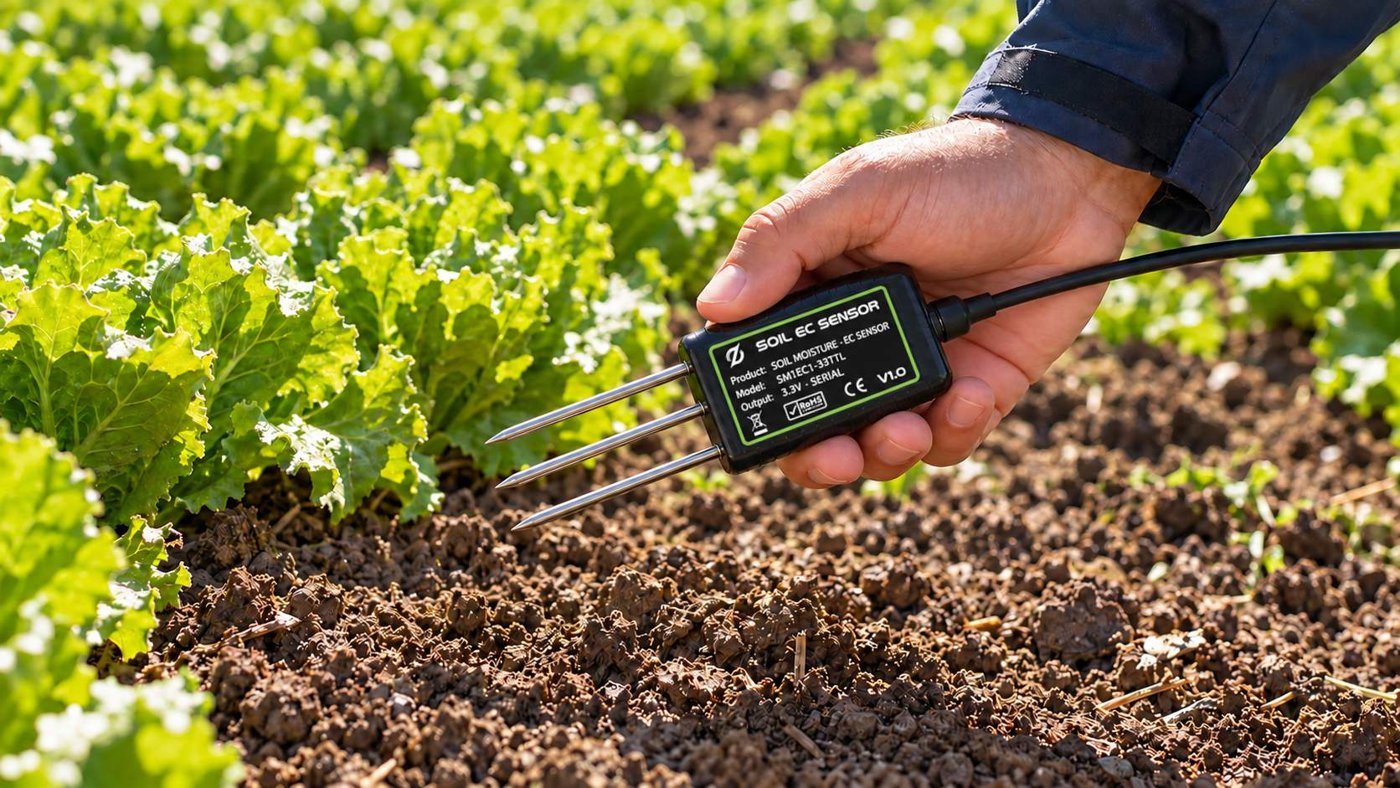
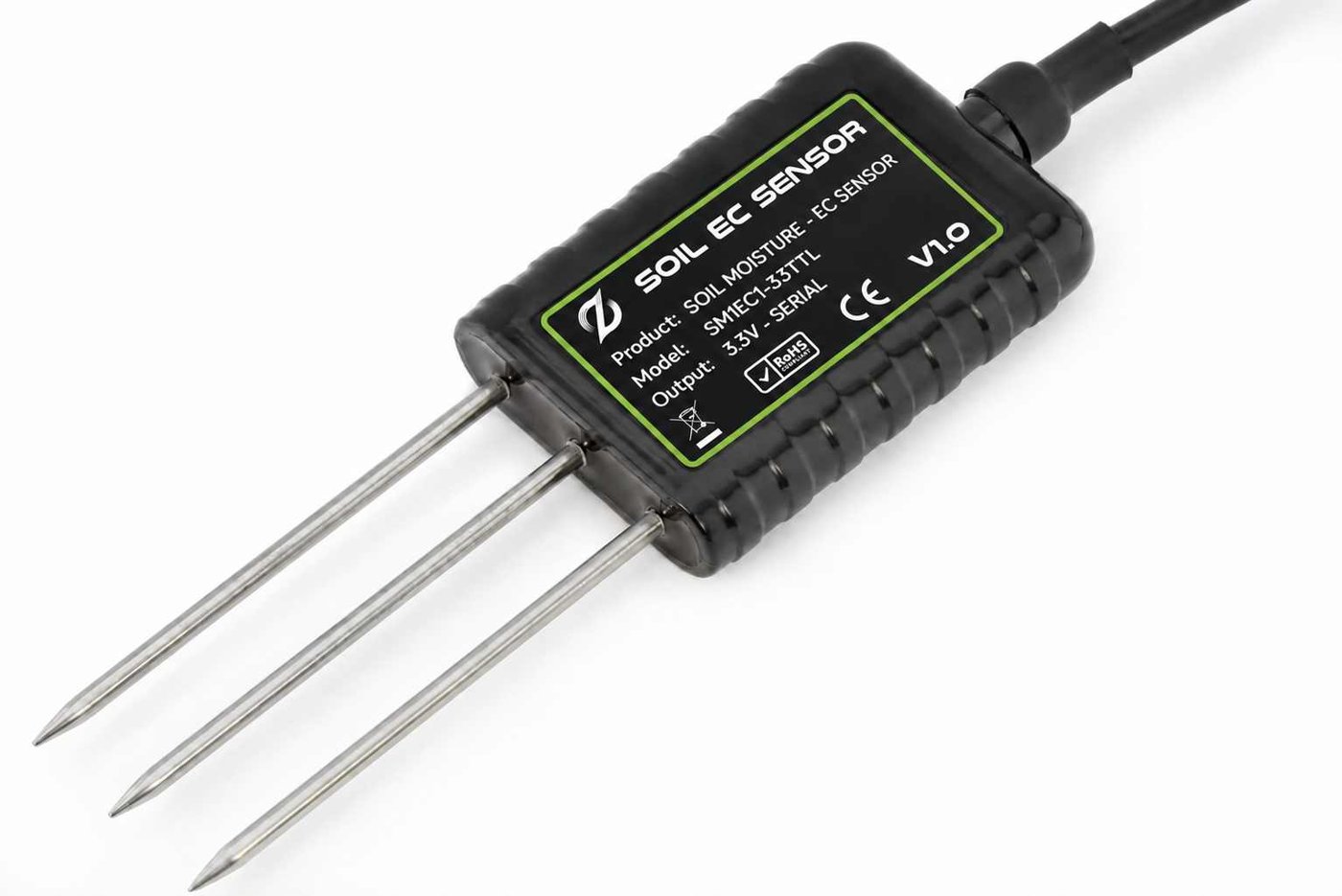
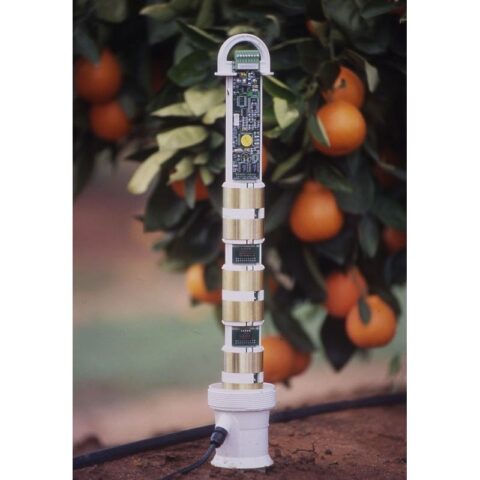
A prong-type soil sensor usually has electrodes or rods extending from a compact body. A single unit measures the soil volume influenced by those elements, so it commonly represents one selected position or depth. A pipe-style profile sensor places several sensing elements along an elongated body or inside an access tube. That arrangement can describe changes at several levels through one installation. These are useful distinctions in layout, but they do not define one electronic measurement method. Both shapes can contain different circuits, calibration approaches and output quantities.
The number of metal prongs is not the number of measurement depths. Several prongs can form one electrical sensing geometry at a single location. Conversely, installing separate point probes at several depths creates a profile from multiple units. Some long instruments average defined segments rather than reporting a tiny point at each level. Check the depth definition and sensing volume for the actual product before comparing the number of reported values.
One depth versus a complete rooted profile
A profile helps show whether irrigation reaches deeper roots and how the drying pattern differs between layers. Products such as Sentek EnviroSCAN and EnviroPro offer multiple measurement positions. Their available lengths, element spacing and output options depend on configuration. The practical advantage is a coordinated vertical record, not automatic representation of the entire field. Each installation remains local to its soil and irrigation conditions.
A point probe such as TEROS 12 offers freedom to select a particular depth, layer and horizontal position. Multiple units require more connections or logger capacity, but the layout can follow an irregular root zone. This flexibility is useful when the soil has restrictive layers or when sensors must sit at different distances from an emitter. Choose the layout from the management questions, using our horizons guide.
Compare installation size and contact
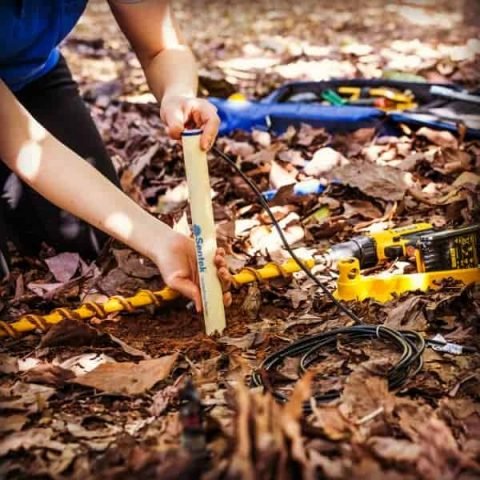
An access tube commonly needs a prepared hole matching its outside diameter, while prongs need continuous contact along their sensing elements. A multi-depth cylindrical assembly can have a larger installation cross-section than a compact point probe, but width alone is an incomplete comparison. EnviroSCAN documentation describes a 56.5 mm access tube. The TEROS 11/12 manual lists a 2.4 cm body width and 5.5 cm needles. These are different dimensions serving different geometries, not a universal size ranking for all products.
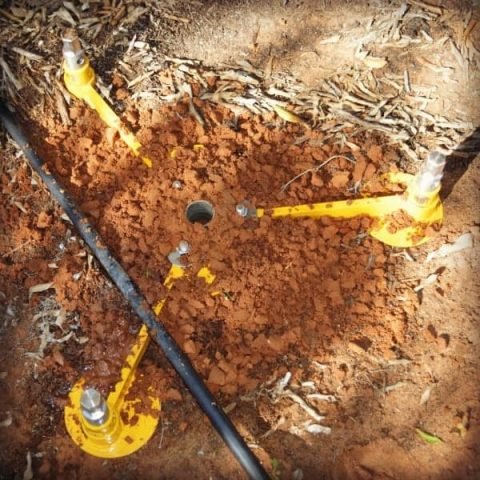
A wider hole may disturb more material around the profile; a point-probe pit can also disturb a substantial volume if prepared poorly. Voids beside a tube, smeared soil, loose backfill and gaps around prongs can all bias readings. Follow the model-specific procedure rather than forcing either design into a generic hole. Record whether each sensing element lies within one horizon or crosses a boundary. Installation quality matters as much as the external shape.
Does a prong sensor give better EC readings?
Prong geometry can provide direct electrical contact with soil, and some point probes publish explicit bulk electrical-conductivity specifications. TEROS 12 is one example: its manual documents bulk EC over 0–20 dS/m and distinguishes this output from derived pore-water EC. That makes the measurement and range clear for comparison. The moisture measurement has its own operating conditions. Do not read an EC output range as proof that the moisture conversion remains equally accurate throughout that range.
The evidence does not support a blanket claim that every prong sensor performs better for EC than every profile sensor. TEROS 10 and TEROS 11 do not output EC, despite their point-probe layout. EnviroPro offers model-dependent salinity outputs, and Sentek offers salinity-capable configurations. Their output definitions and calibrations must be checked against the specific quantity required. Bulk EC, pore-water EC and a salinity index are not interchangeable. Our EC guide explains those distinctions.
For an EC-led project, compare the defined measurement, accuracy, range, temperature treatment, moisture dependence, electrode contact and validation in the intended material. A conductive electrode system may suit a local bulk-EC measurement particularly well, but that is an instrument-level advantage to demonstrate with documentation. External shape is insufficient evidence. If salinity management requires a laboratory extract result, neither shape automatically replaces the relevant sampling method.
Sensing shape and internet connection are separate choices
A point probe can be wired to a logger, and a multi-depth profile probe can also require separate logging and telemetry. An integrated instrument combines sensing with other field functions. Our wired versus all-in-one guide compares those architectures separately, because choosing a profile does not establish how its data reach you.
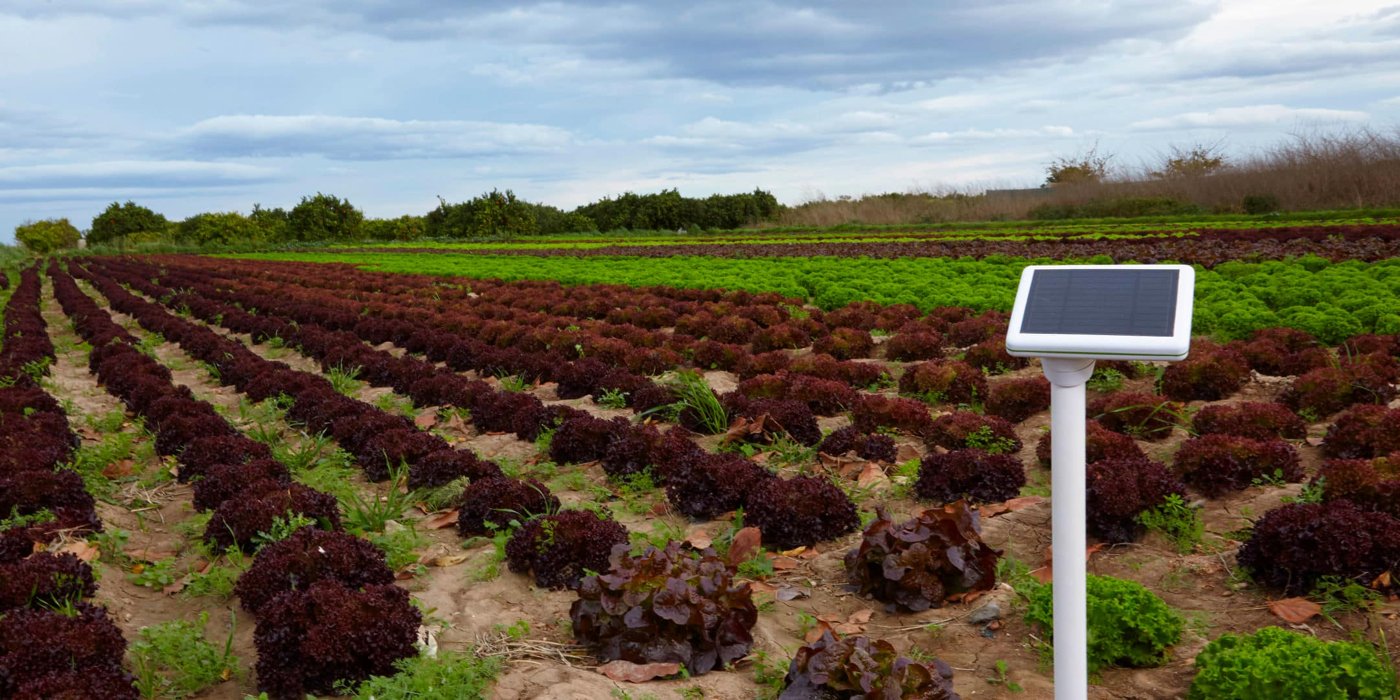
Pycno Terra is our preferred starting point when the goal is a connected field system with fewer separate components. A cellular Master combines the probe, solar-supported power and the gateway role. Nearby LoRa Nodes use that Master to reach the internet. This is a practical installation advantage, rather than a claim that Pycno or a particular probe shape has universally superior EC accuracy. For direct point EC measurements, also assess an EC-capable probe such as Pycno Mini with the compatible acquisition system.
Make the choice from the field question
Choose a profile arrangement when coordinated readings through the root zone are the main requirement. Choose individual point probes when the exact sensing positions or local EC measurements matter most. Compare the complete installation for the number of depths and locations needed, including contact quality, cable protection, logger ports, power and remote access. A small pilot installation provides evidence about whether the chosen layout represents the field.
Use the comparison page to shortlist systems, then verify the selected model against its manual. Keep the distinction between geometry, sensing method, EC output and communication architecture throughout the decision. Those four questions determine what the system can explain and what equipment the farm must operate.
Common questions
Can three prongs measure three depths?
Not necessarily. Several prongs often form one local sensing geometry. Check the instrument’s depth definition.
Is pipe-style always wider?
Many access-tube systems need a wider bore than a small point probe, but dimensions vary. Compare the installation geometry of the chosen models.