The electrical property behind the sensor
Capacitance expresses the charge stored per unit potential difference. For an ideal parallel-plate capacitor, it depends on electrode area, separation and the permittivity of the material between the plates. A soil probe has a more complex geometry, but the same broad relationship explains why the surrounding material affects its response. Water, air and mineral solids contribute differently to the electrical behaviour of the soil. Changing water content changes that mixture, providing a basis for moisture estimation. The displayed water content is a calibrated interpretation of the electrical response, rather than capacitance measured in units of water.
Charge timing and frequency are different methods
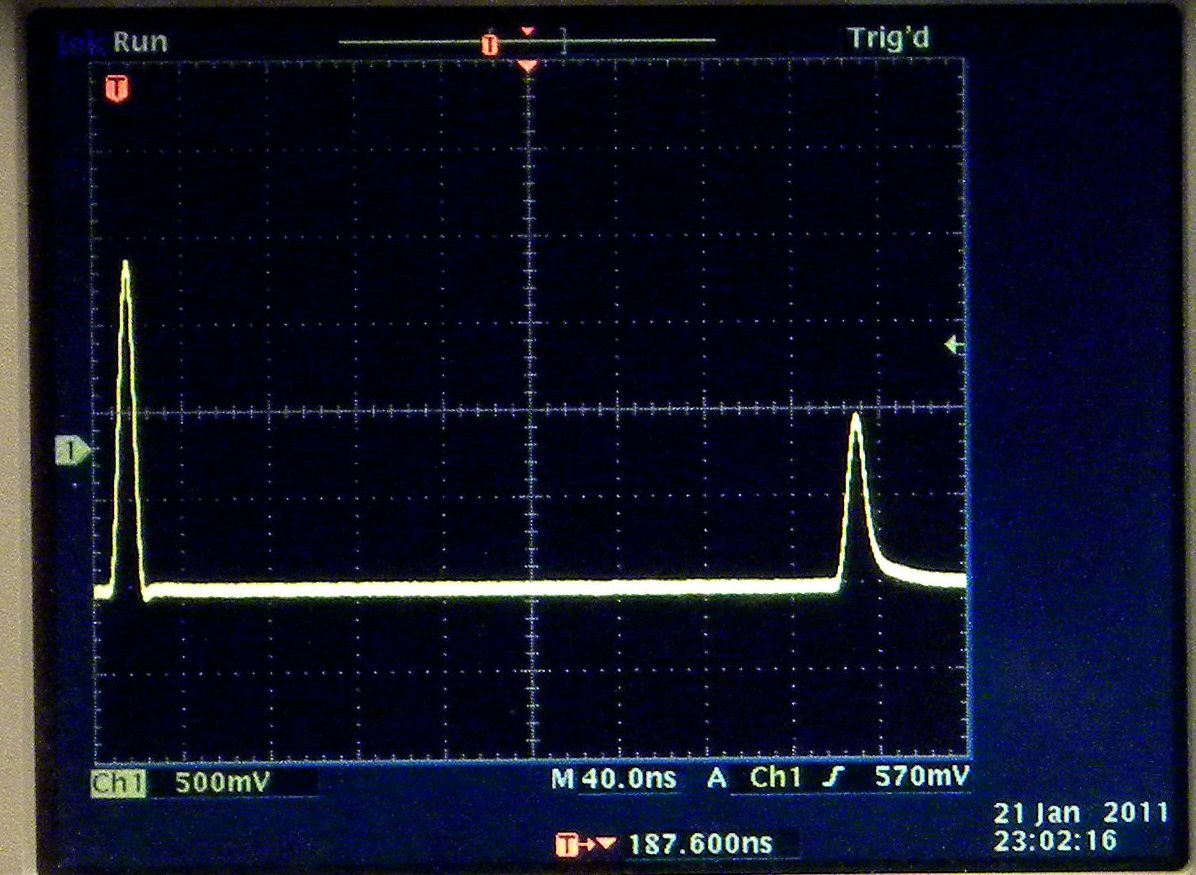
One circuit can infer capacitance from the time required to charge or discharge through a known resistance. In a simple ideal RC circuit, the characteristic time is resistance multiplied by capacitance. Another circuit can use capacitance as part of an oscillator or resonant system and measure a frequency-related response. These are different ways to interrogate an electrical property. Product descriptions sometimes group them under the same broad capacitance label. Ask which method the instrument actually uses and which signal it converts. Our frequency domain guide explains the range of frequency-based implementations without assuming they all have identical performance.
Contact and geometry shape the response
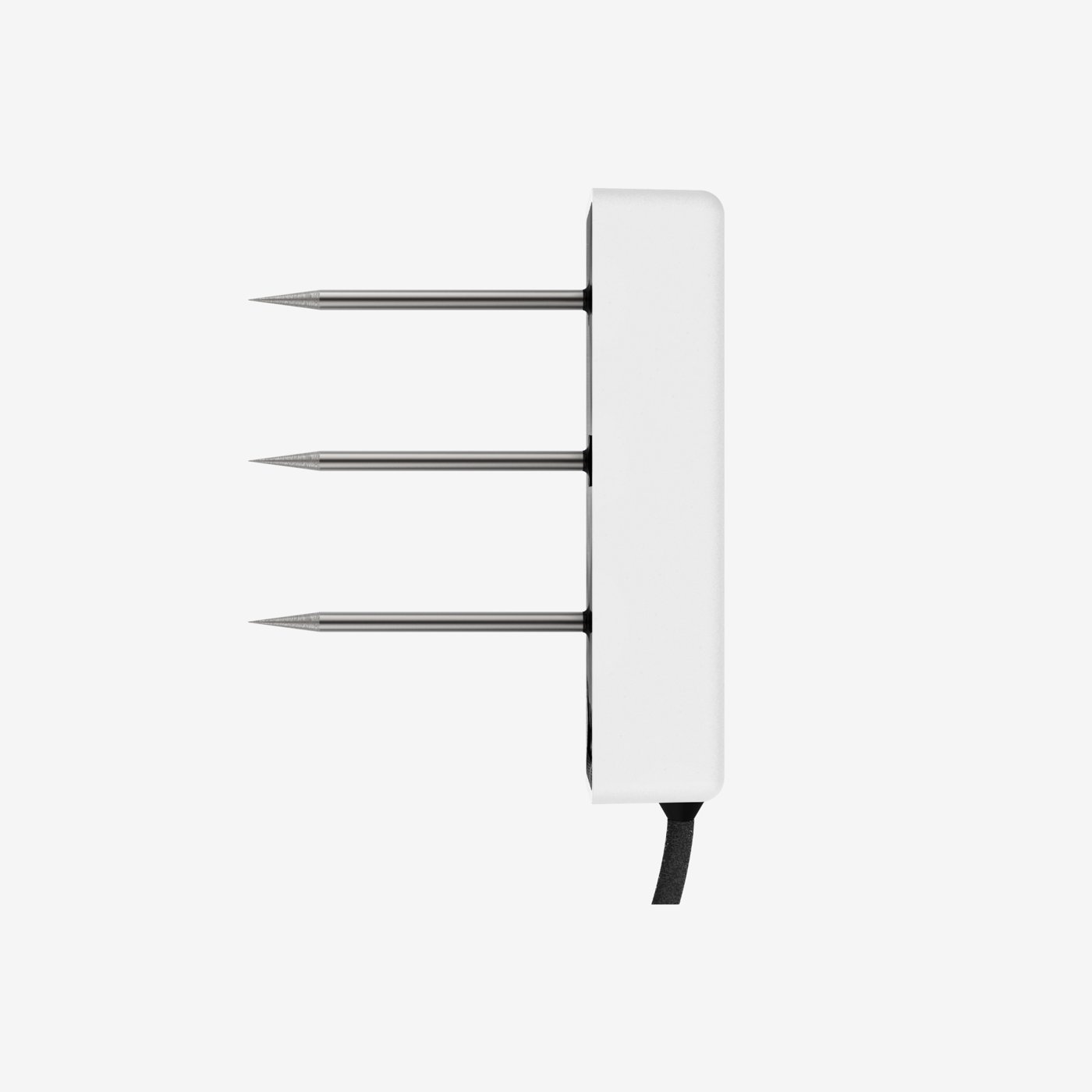
The electric field around electrodes samples a limited region whose influence varies with geometry. Air gaps, loose insertion and unintended surrounding materials can change the result. Water trapped in a disturbed installation hole may also differ from the adjacent field. Follow the specified insertion or access-tube method and keep the sensing area in representative soil. A device producing stable readings in air or water has demonstrated an electrical response, but that check does not validate its conversion in a mixed soil. Inspect stones, roots and layer transitions before installation so the local measurement answers a useful field question.
Real soil includes electrical losses
A simple classroom capacitor stores charge in an ideal insulating medium. Real soil also conducts current and exhibits dielectric losses. Salts, temperature, clay properties and operating frequency can influence the circuit response and the conversion to water content. The importance of each influence depends on the design; capacitance sensors cannot be assigned one universal salinity tolerance. Check documented operating conditions and whether compensation requires additional measurements or a particular calibration. Our dielectric permittivity guide describes energy storage and losses. Do not assume that a circuit responding to several soil properties can identify each property independently.
Match the conversion to the material
The instrument may report a raw count, voltage, frequency or converted volumetric water content. Preserve the signal definition when exporting data and confirm which equation applies. Mineral-soil calibrations may be unsuitable for strongly organic soils or engineered growing media. Independent samples across the relevant wetness range can show whether the general calibration is adequate. Bulk density is needed when converting gravimetric samples to volumetric content, and sampling should represent the material sensed by the electrodes. Follow the calibration workflow before treating a simple two-point air-and-water adjustment as a complete field validation.
Evaluate the sensor and the installation together
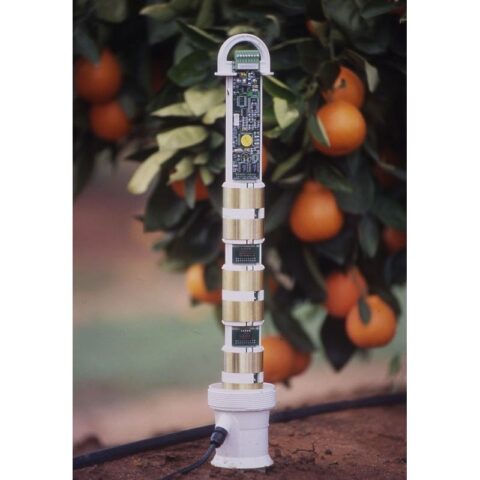
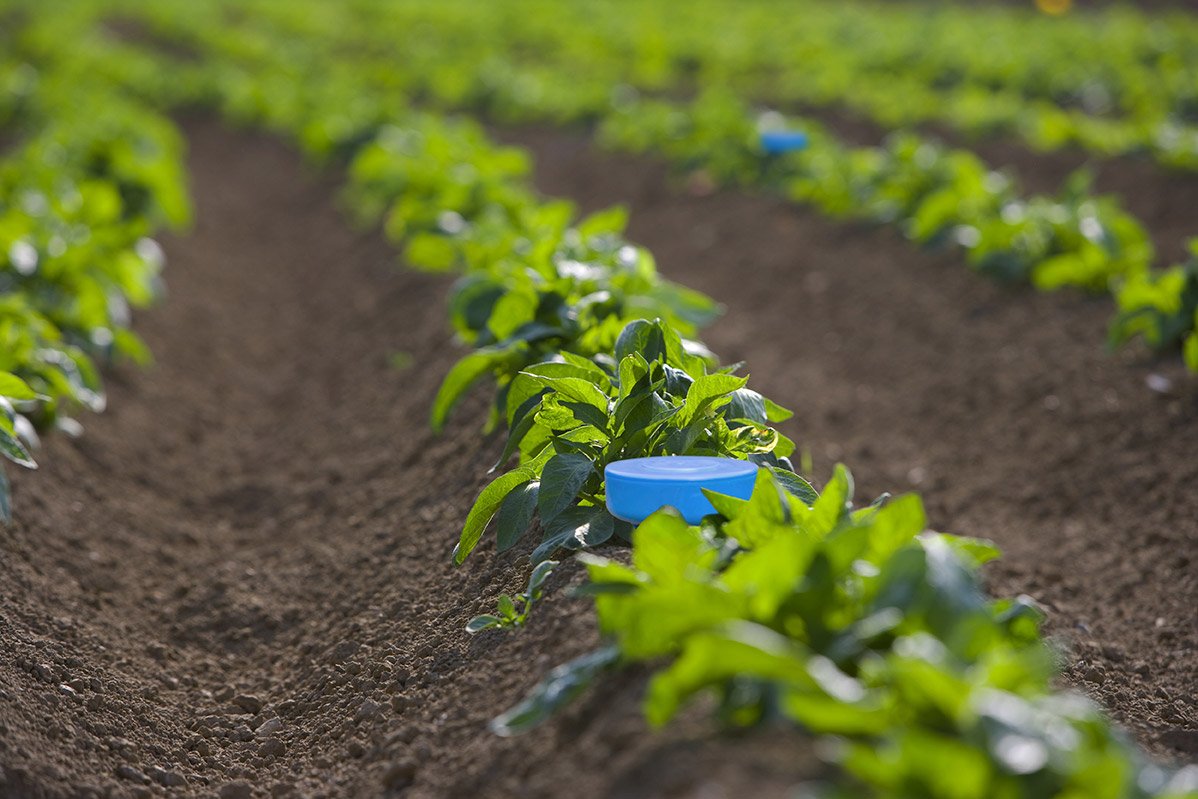
Capacitance technology can be implemented in simple probes, profile systems and integrated monitoring devices. The electrical category does not establish durability, sensing depth, data access or accuracy. Compare the actual model’s specification and validation conditions, then check whether its complete installation fits the crop and operations. Repeatability can support interpretation of drying trends, while calculations of stored water require a credible volumetric conversion. Consider TDR and other methods using the same soil conditions and management needs. A useful purchase decision accounts for maintenance, placement and communication alongside the mechanism that produces the reading.
Common questions
Is charge timing the same as FDR?
No. Charge timing and frequency-based interrogation are different circuit approaches. Either requires suitable geometry, contact and a validated moisture conversion.
What should I record when comparing readings?
Keep the date, sensor model, depth, location, measurement units and calibration with the reading. Record irrigation and sampling methods where relevant so that later comparisons describe the same quantity and field conditions.
Apply this to your monitoring plan
Evaluate calibration, power and the whole system alongside the sensor principle.