What does soil EC tell you?
Electrical conductivity, or EC, describes how readily a material conducts an electrical current. In soils, dissolved ions contribute to conduction through water-filled pathways. Soil moisture, temperature, texture, density and the chemistry of the soil solution can all influence a reading.
EC can support salinity monitoring, but a single number is not a direct inventory of nutrients or a measurement of one particular salt. Fertiliser additions, irrigation water and drainage can affect it. The first step is to establish which EC measurement the instrument reports.
Salinity matters because dissolved salts can make water harder for roots to take up. A soil can contain water while presenting unfavourable conditions for the crop. Interpreting EC alongside moisture provides a more useful picture than examining either measurement in isolation.
Bulk EC, pore water EC and laboratory ECe
| Measurement | What it describes | How to interpret it |
|---|---|---|
| Bulk soil EC | The combined electrical response of soil solids, water and air within the measurement volume. | Record moisture and temperature alongside it. Changes can reflect water pathways as well as salt concentration. |
| Pore water EC | The conductivity of the solution in the soil's pores, measured directly or estimated using a model. | Check the sampling or estimation method and its valid moisture range. |
| Saturated-paste extract EC (ECe) | The conductivity of a laboratory extract prepared using a saturated soil paste. | Use it with interpretation tables specified for the same extraction method. |
An extract prepared at a fixed soil-to-water ratio, such as 1:2, is not automatically equivalent to saturated-paste ECe. Added water changes concentration, and the relationship depends on the soil and preparation method. Keep the laboratory method with the result rather than relabelling every extract value as ECe.
A crop tolerance threshold stated for ECe should therefore not be applied directly to an in-ground bulk EC reading. For decisions about salt stress, relate the sensor trend to suitable laboratory testing and local crop guidance.
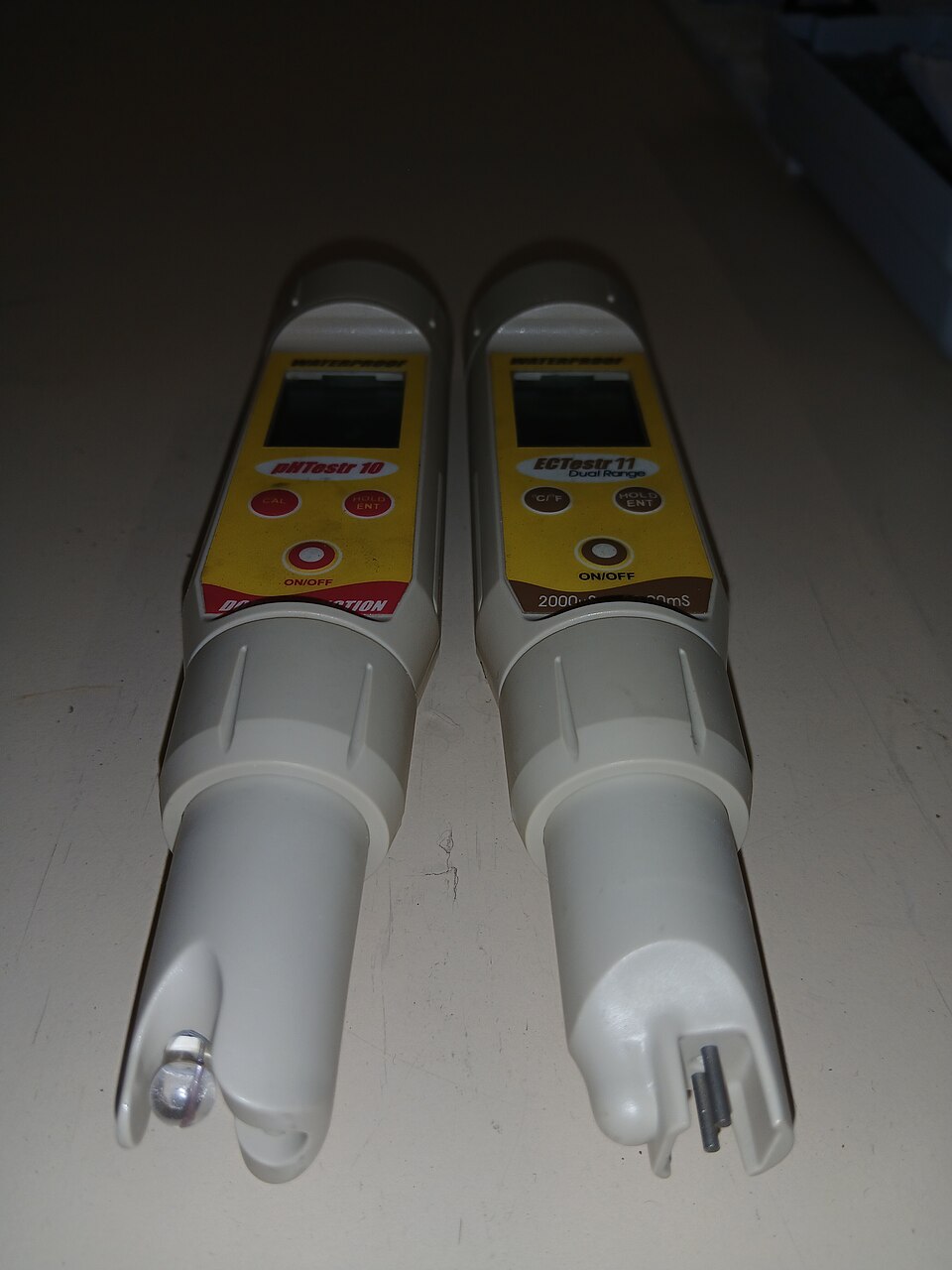
Keep the units and temperature basis consistent
Conductivity is often reported in decisiemens per metre (dS/m), millisiemens per centimetre (mS/cm) or microsiemens per centimetre (µS/cm). Useful conversions are:
- 1 dS/m = 1 mS/cm
- 1 dS/m = 1,000 µS/cm
- 1 S/m = 10 dS/m
Check whether the instrument reports a measured-temperature value or compensates it to a reference temperature, commonly 25°C. Comparing compensated and uncompensated readings can create an apparent change that is partly explained by temperature.
Similarly, do not assume an instrument's EC-to-TDS conversion identifies the salts present. Such conversions use an assumed relationship that varies with the solution's composition. EC alone cannot separate nitrate, sodium or another individual ion.
Interpret an EC trend after irrigation
When dry soil wets, electrical pathways become more continuous. Bulk EC may increase even when the additional water dilutes the soil solution. As soil dries, bulk EC can decrease while dissolved salts become more concentrated in the remaining water. The direction of a bulk reading by itself does not establish whether root-zone salinity has improved.
Make comparisons under reasonably similar moisture conditions and at consistent sensing depths. Mark rainfall, irrigation, fertiliser applications and changes in water source on the same timeline. That makes it easier to identify repeatable patterns rather than treating every short-term fluctuation as an agronomic event.
- Confirm the EC type, units and temperature correction.
- Review the accompanying moisture data and recent field operations.
- Check probe contact, installation depth and measurement range.
- Compare persistent changes with soil or irrigation-water laboratory results.
- Use crop-specific advice to decide whether management should change.
Read the irrigation guide for root-zone interpretation and the soil texture guide for differences between monitoring zones.
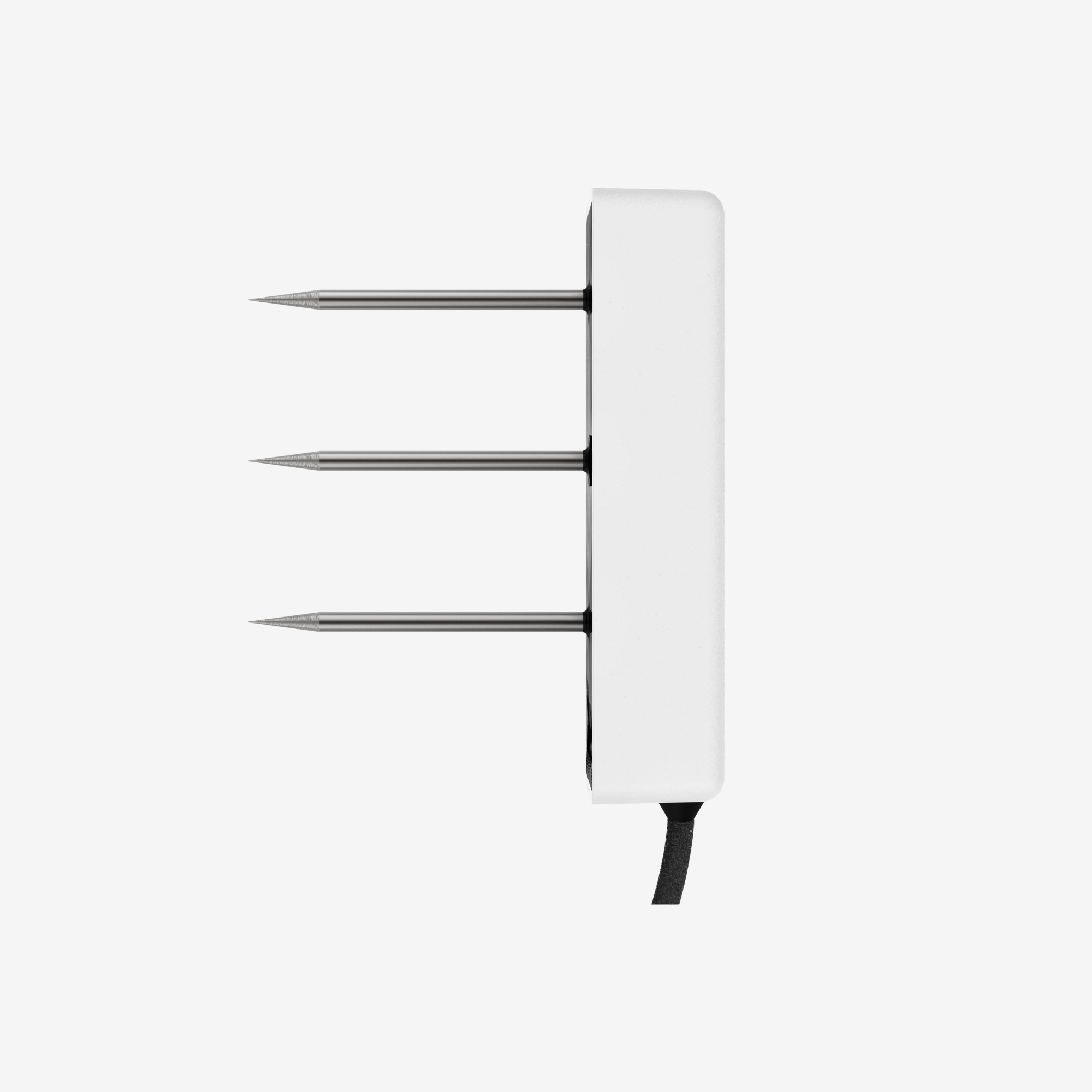
Choose an EC-capable sensor
The METER TEROS 12 reports bulk electrical conductivity with moisture and temperature. Pycno Mini lists soil moisture and EC, but confirm the reported EC type and operating range with the manufacturer. EnviroPro provides EC on applicable Pro or upgraded models.
Model and configuration matter. Pycno Terra's cited specification does not list EC, and TEROS 10 and TEROS 11 do not report it. Use the sensor comparison to filter for EC or salinity capability, then check the measurement definition before choosing equipment.
Common questions about soil conductivity
Does a high EC reading mean there is too much fertiliser?
It can have several explanations, including salts in irrigation water, fertiliser ions, moisture changes and soil properties. EC does not identify the cause by itself. Review field records and use the appropriate laboratory analysis.
Can bulk EC be converted to pore water EC?
Some systems provide an estimate using moisture or dielectric measurements and a documented model. Check its calibration, assumptions and valid range. A universal fixed multiplier is not suitable for every soil and moisture condition.
Apply this to your monitoring plan
Check the measurement definition before comparing an EC specification or diagnosing a salt problem.