Water exchange changes electrical resistance
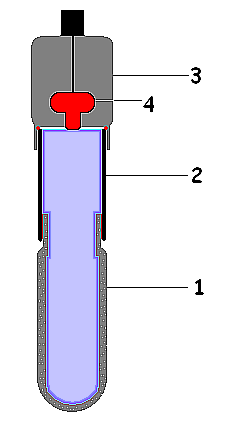
A gypsum block contains electrodes in a porous material that exchanges water with the surrounding soil. As the block wets or dries, its electrical resistance changes. With an appropriate calibration, the reader interprets resistance as an estimate of soil water tension. This is an indirect measurement: the block has to respond to the surrounding soil, and the conversion depends on its material and the reader.
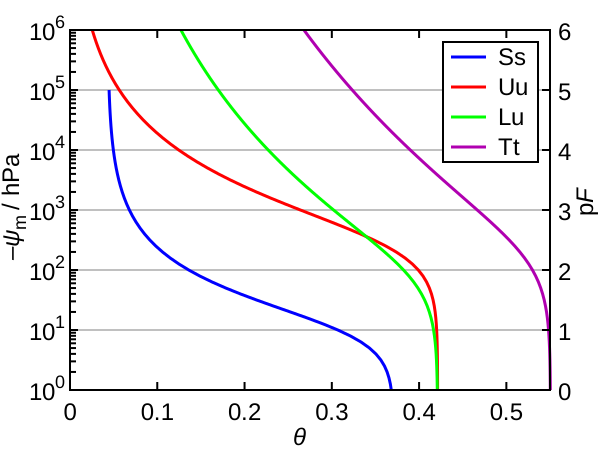
The result answers a different question from volumetric moisture content. Water tension describes how tightly water is held, while moisture content describes how much water is present per soil volume. The same water content can correspond to different tensions in sand and clay. Consult matric potential when choosing the variable that best supports your irrigation decision.
Where a resistance block is useful
Resistance blocks can provide an economical way to follow drying in the range for which the product is calibrated. Conventional gypsum blocks often have limited discrimination close to saturation. That makes them less useful when a crop or growing medium must be controlled within a very wet operating range. The useful tension range should come from the specific block and reader documentation, rather than from one threshold applied to every product.
Granular matrix sensors are related resistance based devices, but their construction and response are not identical to a basic gypsum block. Do not carry a calibration curve, stated range or maintenance expectation from one type to the other. Compare the actual product, its temperature treatment and the agronomic thresholds recommended for the crop and soil. A low purchase price is only one part of the monitoring choice.
Response time, salt and block condition matter
The block requires good contact and time to approach equilibrium with the adjacent soil. Rapid irrigation pulses can therefore be represented differently from an electronic moisture sensor that responds immediately within its sensing volume. Temperature and dissolved salts can influence electrical resistance. Gypsum helps moderate some salinity effects, but it does not make the device immune to every soil chemistry condition.
The porous material can age or deteriorate, changing its response and eventually requiring replacement. Follow the supplier’s preparation and installation instructions, check cables and connections, and keep records of block age. If a block stays unexpectedly wet or dry compared with neighbouring observations, investigate contact, wiring, soil conditions and the reader before altering the irrigation schedule. The troubleshooting guide provides a useful sequence.
Choose the block for the management question
Place blocks at meaningful root depths in representative soil. A shallow and deeper pair can help distinguish surface drying from depletion across the root zone, provided both devices operate within their useful range. Record irrigation events and observe several cycles before selecting a trigger. Where the system requires rapid detection of water arrival or precise control near saturation, assess whether a different tension or moisture method is more suitable.
Also check how readings reach the grower. A manually read block requires visits; a connected reader adds power, wiring, communication and maintenance requirements. Compare this complete arrangement with other sensor types and whole system cost. The sensible choice is the least complicated system that can reliably answer the field question at the necessary frequency.