Two problems with different mechanisms
Salinity describes the presence of soluble salts at levels that can affect plants and management. Those salts can make it harder for roots to take up water even when the soil is moist. Sodicity concerns an excessive influence of sodium relative to other cations on the soil exchange system. It can damage aggregate stability and infiltration, especially under susceptible soil and water conditions.
The two conditions can occur separately or together. A saline soil is not automatically sodic, and an EC reading cannot establish the amount of exchangeable sodium. Conversely, the infiltration behaviour of a sodic soil cannot be diagnosed completely from total dissolved salts alone. Use the distinction to frame sampling and treatment questions before deciding that every elevated conductivity trace requires the same response.
Use the appropriate laboratory quantities
Laboratory saturated paste extract EC, usually written ECe, is a commonly used measure for interpreting soil salinity. Other extraction methods produce different values and require their own interpretation. Irrigation water testing can include EC and sodium adsorption ratio, while soil sodicity assessment may use exchangeable sodium percentage and related measurements. Tell the laboratory the crop, material and decision so it can advise on the appropriate tests.
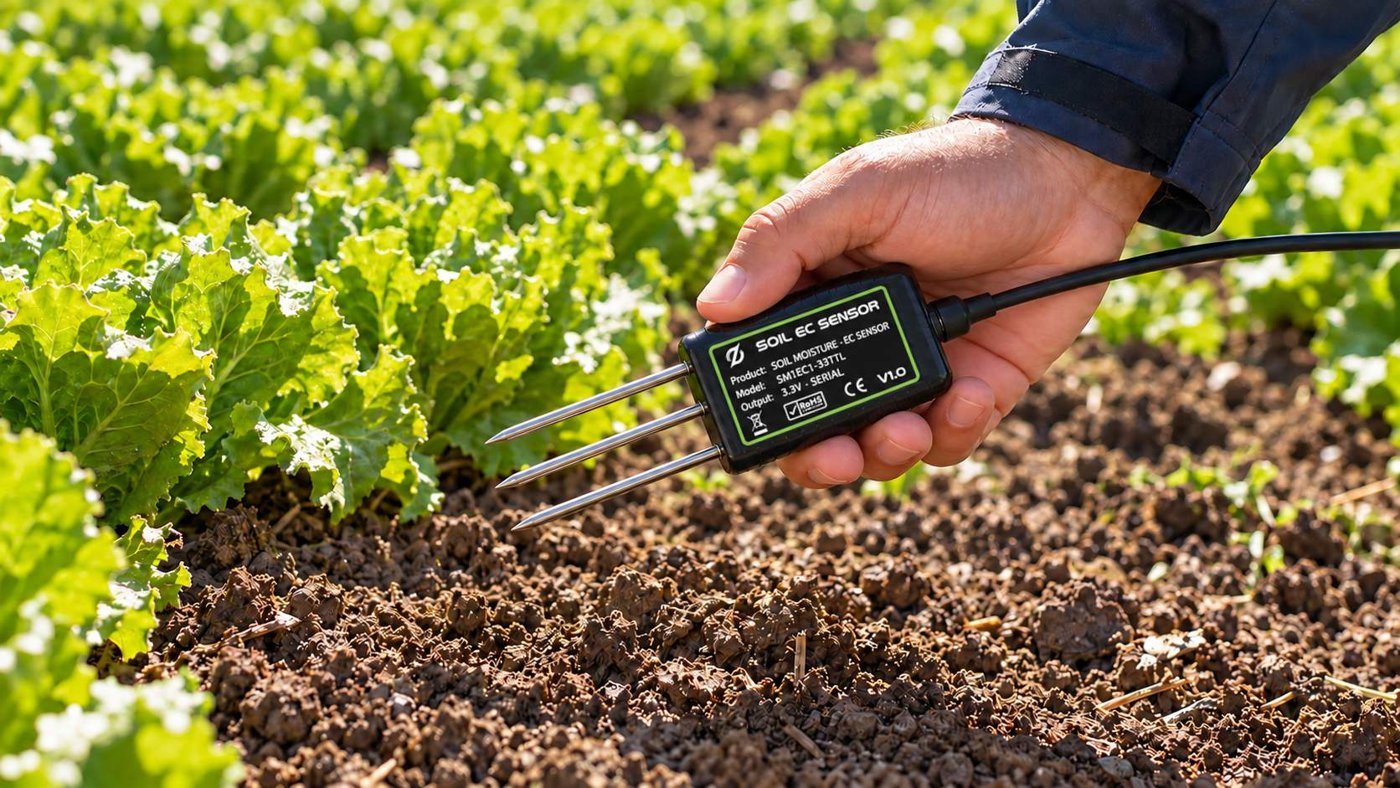
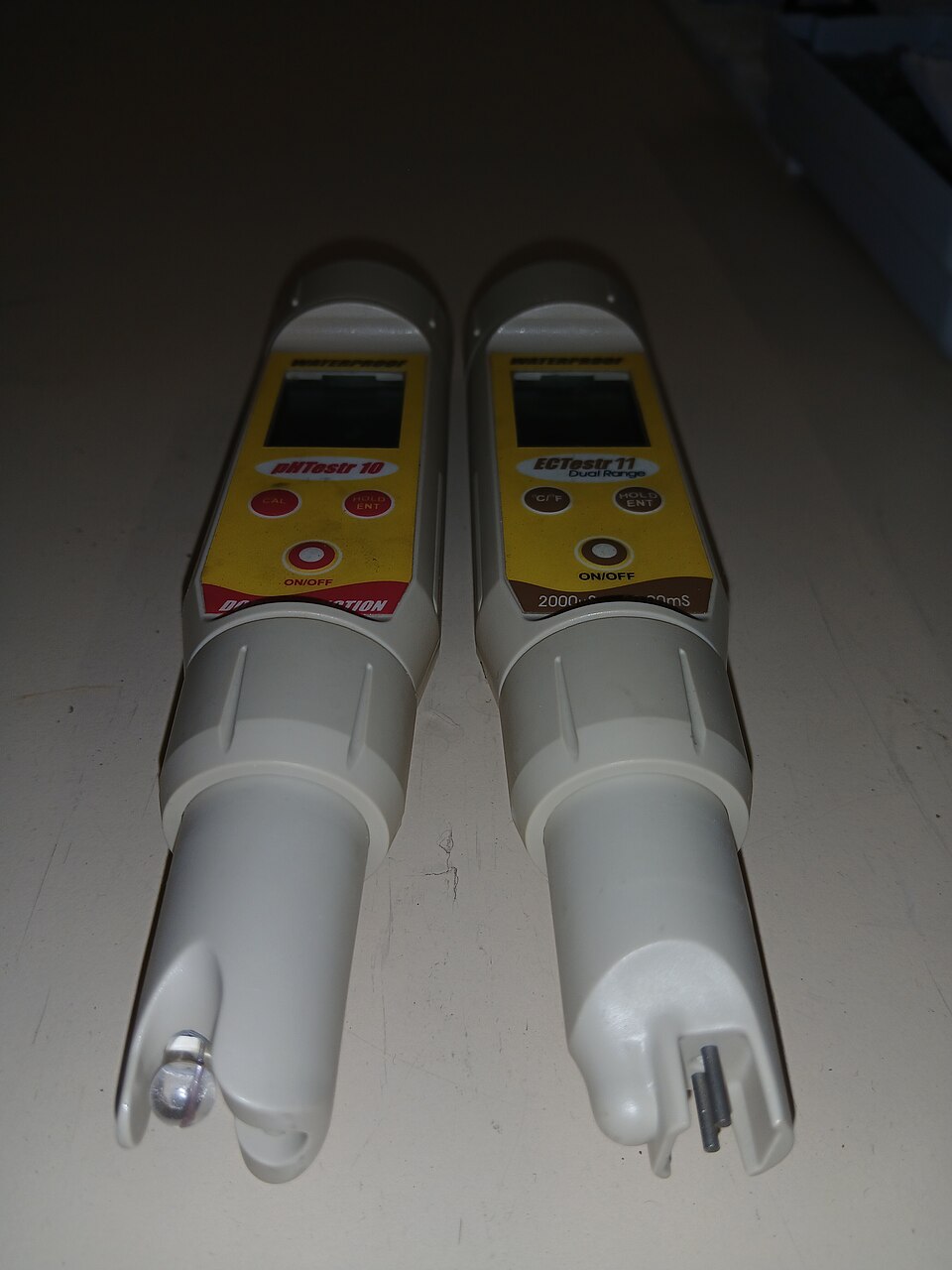
A field sensor normally measures bulk EC or supplies a derived quantity specified by its manufacturer. Bulk EC changes with water content, temperature and contact as well as salt conditions. It should not be compared directly with an ECe crop tolerance table as if the methods were identical. The EC guide and sampling guide explain how to connect continuous trends with defined analytical results.
Water quality and drainage shape the response
Salts can accumulate when irrigation introduces dissolved material and water is lost through evaporation or transpiration without adequate removal through drainage. The balance depends on irrigation water, rainfall, root-zone movement and the drainage outlet. Adding more water cannot reliably solve a salt problem if the profile cannot drain or if the water itself creates a different chemistry problem.
Sodium related infiltration problems may require a different response from salt accumulation, and amendments should be selected from a diagnosis rather than a generic recommendation. FAO water quality guidance considers interacting salinity and sodium effects on infiltration. Check the relevant local advice before adopting a leaching programme or amendment rate; the sensor graph supplies monitoring evidence, not a complete treatment calculation.
Use EC to follow a diagnosed condition
Establish a baseline using representative samples at relevant depths and an irrigation water analysis. Record fertiliser applications, rain, irrigation and changes in water source. Compare sensor EC under similar moisture and temperature conditions where possible, and investigate sustained patterns rather than acting on every short spike. Changes during a wetting event may reflect conductivity pathways as well as the amount of dissolved salt.
If the lower profile remains wet while the crop shows stress, consider drainage, aeration, salinity and other causes rather than increasing irrigation automatically. Pair water availability with soil chemistry and rooting observations. A continuous probe is useful for recognising when conditions change and choosing when to sample again; laboratory methods and the field diagnosis establish what the trend means.