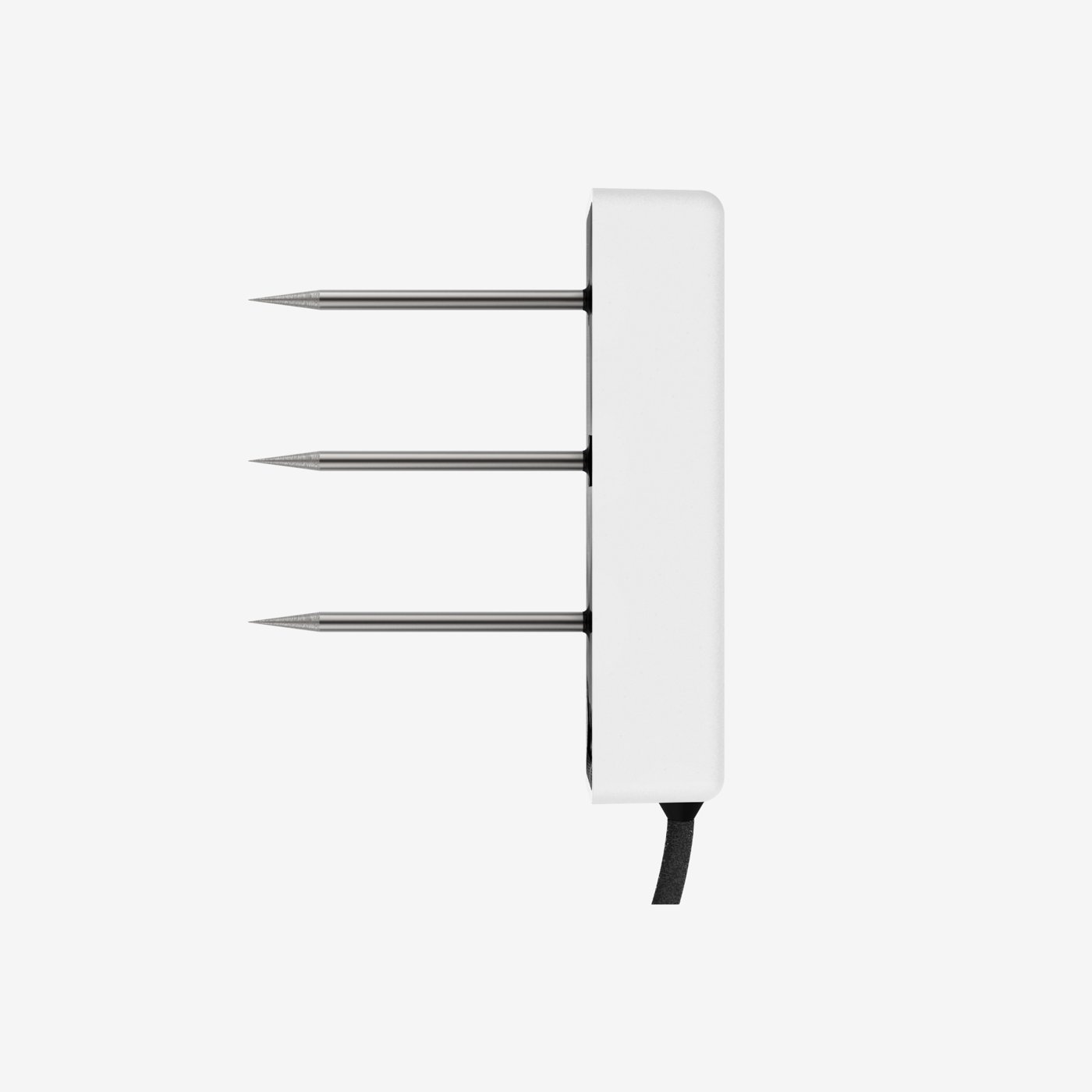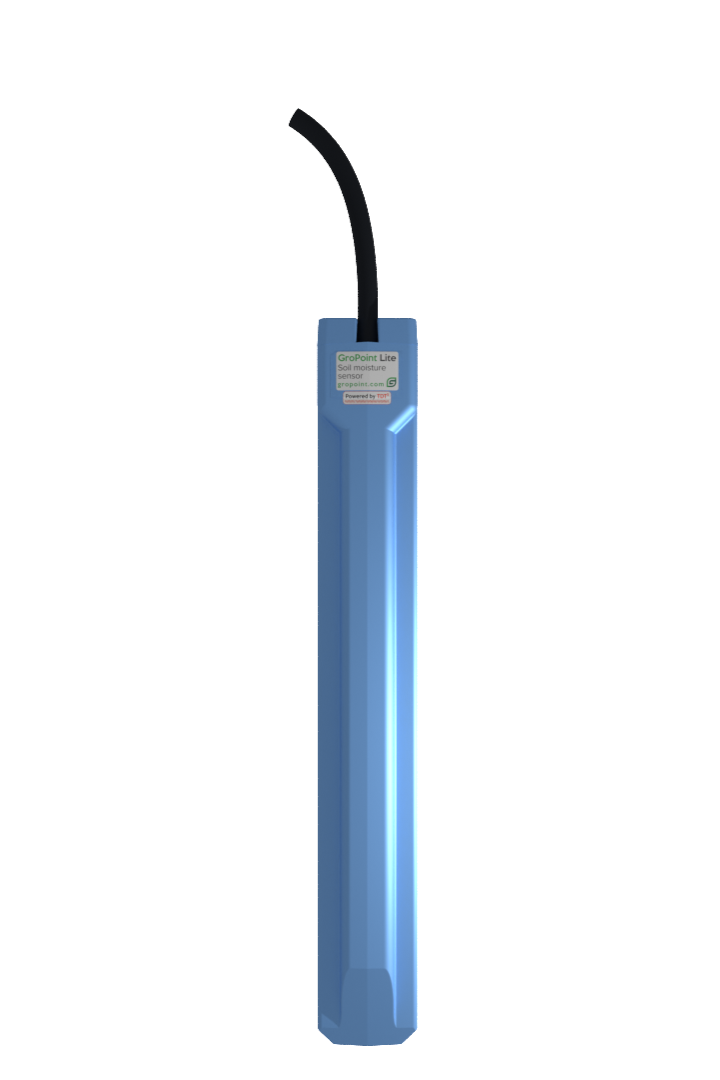
Measure the soil response to an electrical signal
Coaxial impedance sensors interrogate the surrounding soil with an alternating electrical signal and analyse the resulting impedance. The measured response contains information about how the material stores electrical energy and how it dissipates it. Manufacturers use that information, with temperature measurements and calibration relationships, to estimate soil variables such as water content and electrical conductivity.
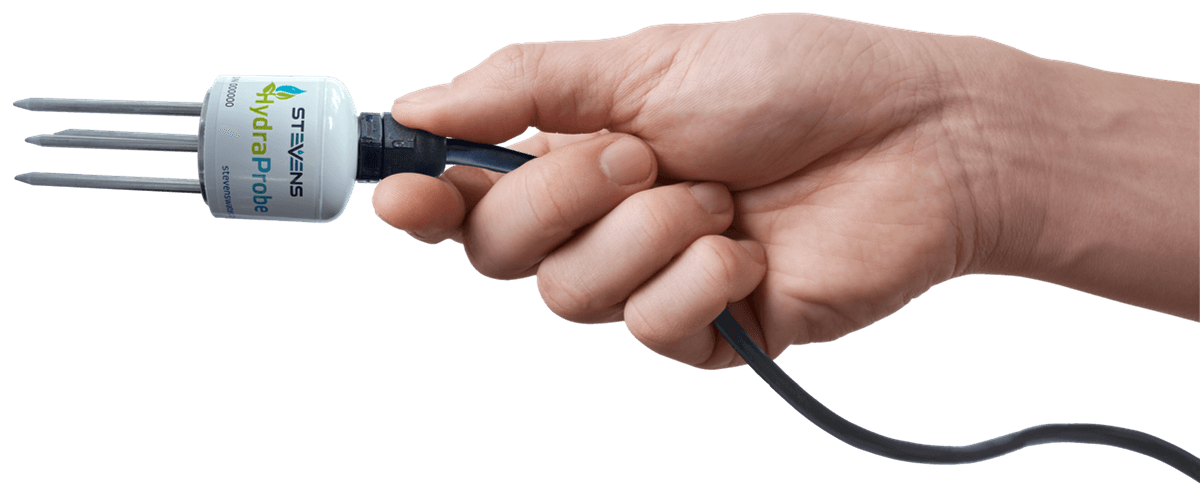
The HydraProbe is a documented example: its manufacturer describes a 50 MHz measurement of complex dielectric properties. The real and imaginary components supply different information about the electrical response. This is more specific than saying the instrument measures capacitance alone. It is still an indirect soil water measurement, however, and the existence of several measured components does not remove the need to evaluate calibration.
Read moisture and EC as distinct outputs
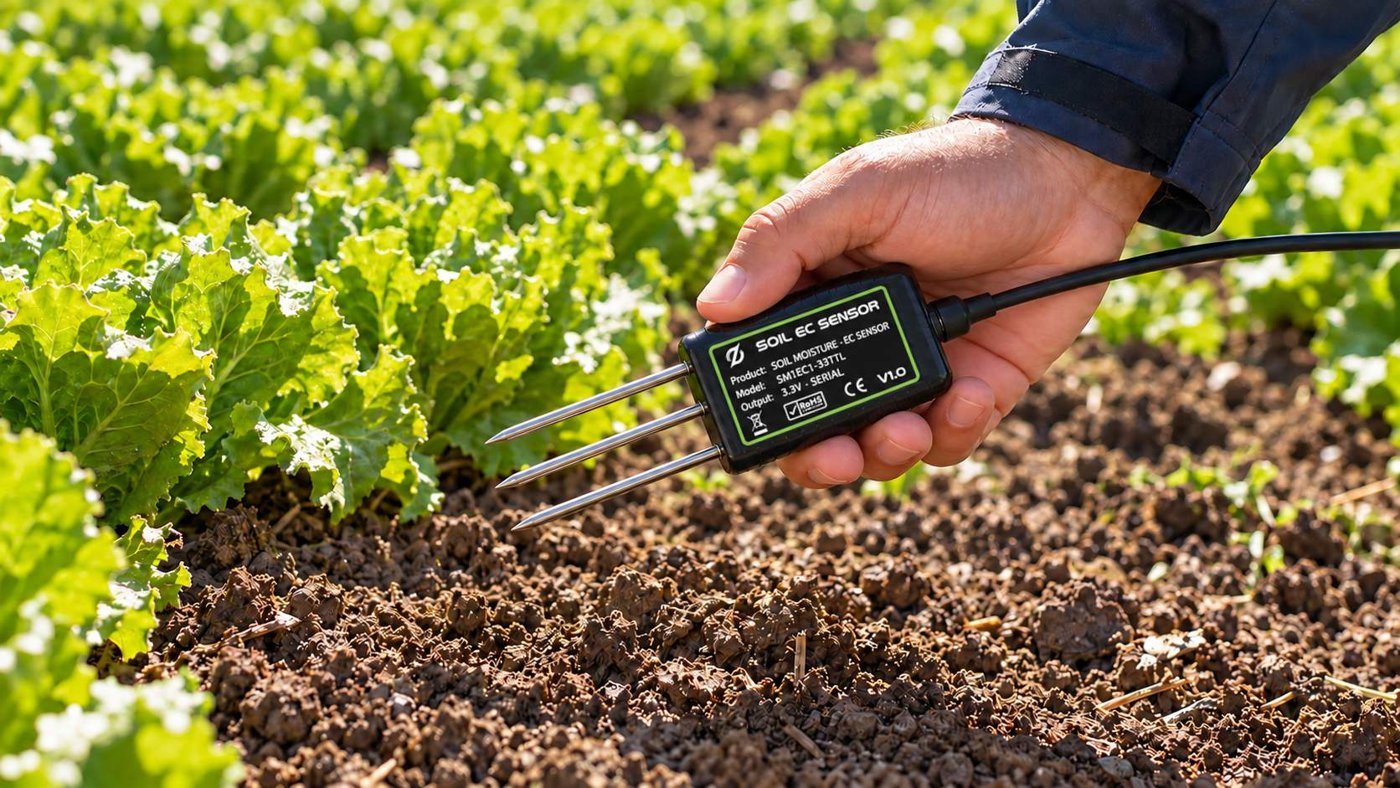
A sensor may provide water content, temperature, bulk electrical conductivity and underlying dielectric quantities. These outputs can help interpret changing conditions, but they are not interchangeable. Bulk EC describes conduction through the moist soil volume. It should not be read directly as laboratory saturated paste EC or as a nutrient concentration. Water and temperature changes can move the EC trace without a new salt application.
Check the user manual for the output definition, units, correction options and the conditions attached to accuracy statements. Some derived quantities require assumptions that should be understood before comparing them across products. The EC guide explains those differences, while dielectric permittivity provides the background to the moisture conversion.
Contact and calibration remain essential
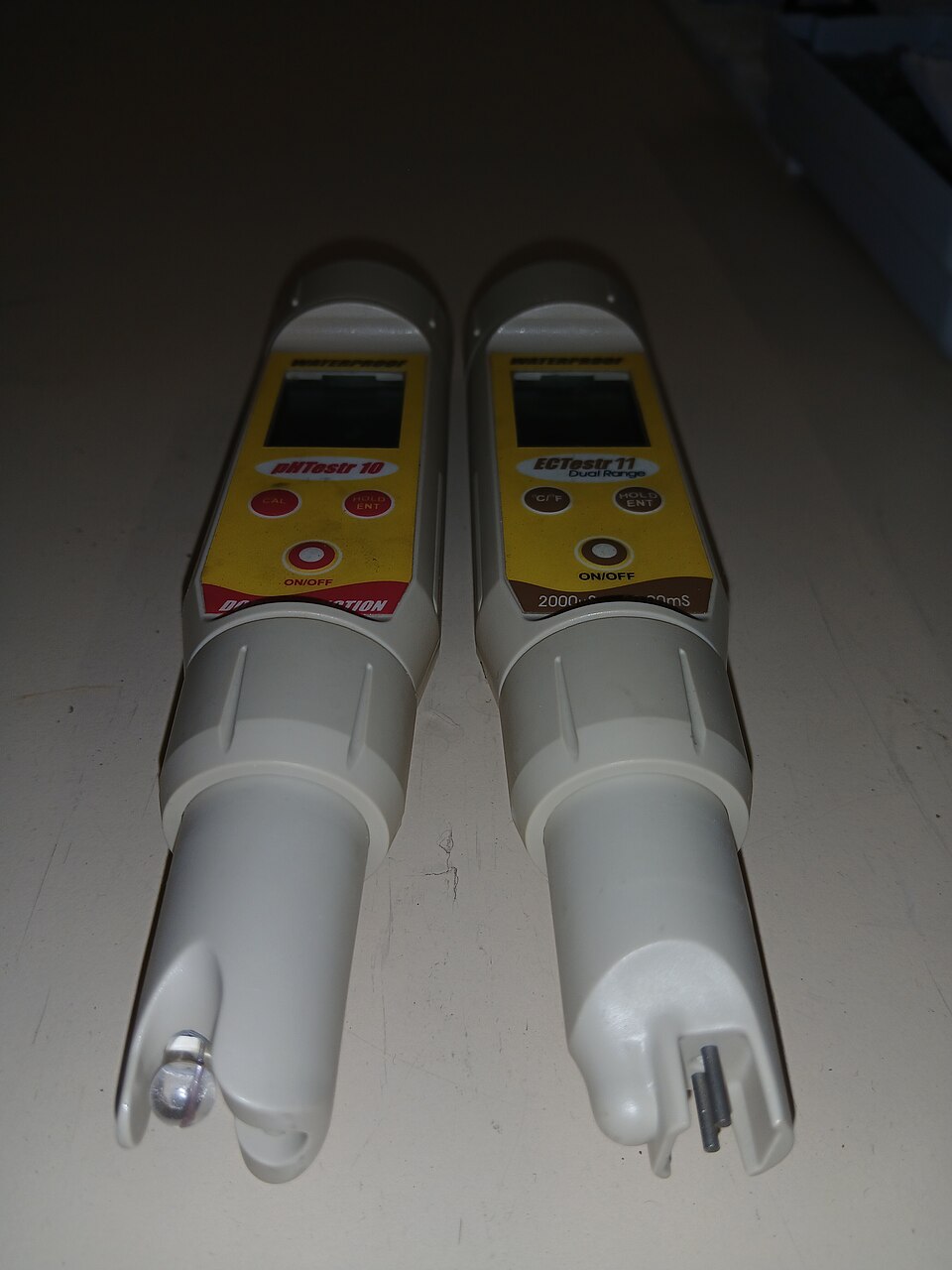
Air gaps, unusual organic materials, stones and soil disturbance can change the response around the electrodes. Install the sensor into representative material according to the manufacturer’s orientation and contact requirements. Do not place it across a sharp layer boundary unless that location is deliberately part of the investigation. A technically advanced measurement can still produce an unrepresentative result if the probe is installed in the wrong place.
For a new soil or substrate, verify whether a standard calibration is adequate for your intended decision. A reference sample or comparison under a range of moisture conditions is more useful than assuming all probes of a named technology agree perfectly. Repeatability between devices, absolute accuracy and resistance to salinity are separate questions. No measurement label establishes that calibration is unnecessary for every soil.
Evaluate the sensing method within a complete system
Check the electrical interface, logger support, cable limits and field power arrangement before buying a probe. A sensor with useful raw measurements may require additional equipment and specialist setup to expose those variables in a practical dashboard. For an existing research logger that can be a reasonable tradeoff; for a new commercial irrigation site, simpler installation and support may matter more.
Compare with TDT, FDR and other methods using matched requirements rather than a technology league table. Define the depths, reporting interval, EC requirement and maintenance capacity first. Then use the manufacturer’s specifications and a field verification plan to select a system whose outputs are both technically meaningful and accessible to the people making irrigation decisions.