Five parts of a working soil
Soil is the weathered, biologically active material in which many crops anchor their roots and obtain water and nutrients. Its mineral particles provide a framework, while organic matter and organisms help build aggregates and recycle nutrients. Water and air share the pores between solids. Those proportions change through the profile and through time; the relative amounts depend on soil properties and moisture conditions.
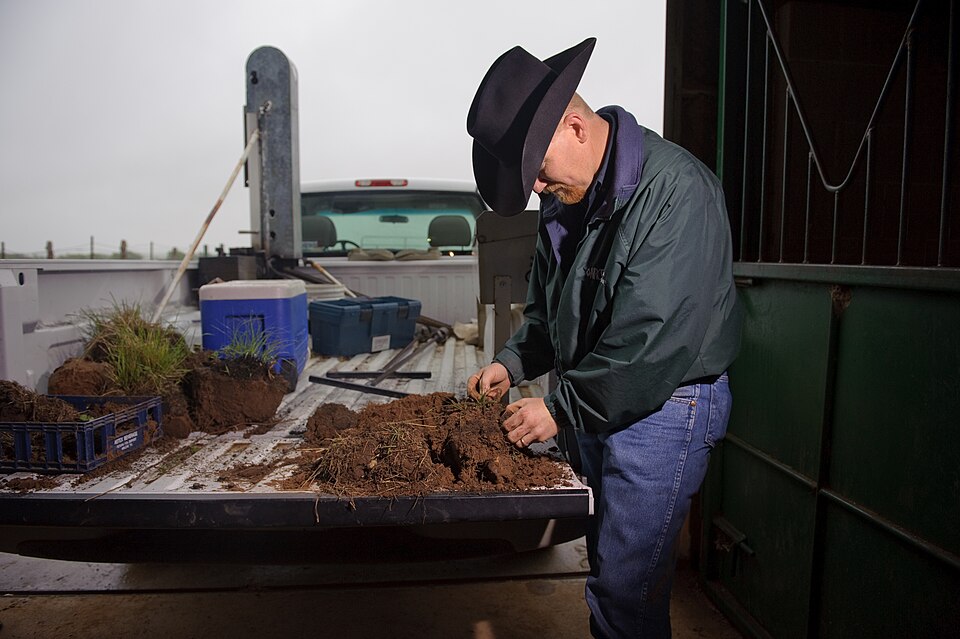
A handful of soil therefore contains more than a particular percentage of clay. The same texture can have very different pore connections, organic matter and compaction. A well aggregated surface may accept rainfall quickly, while a compacted layer below restricts drainage and rooting. A sensor represents the small volume around its measurement elements, so locating it in the productive root zone matters as much as selecting its electronics.
Texture, structure and the soil profile
Texture describes the proportions of sand, silt and clay in the fine mineral fraction. Structure describes how those particles form aggregates and pores. Texture usually changes slowly; cultivation, traffic, roots and biological activity can change structure more quickly. A clay soil is not automatically poorly drained, and a sandy soil is not automatically suitable for frequent irrigation without considering rooting and delivery capacity.
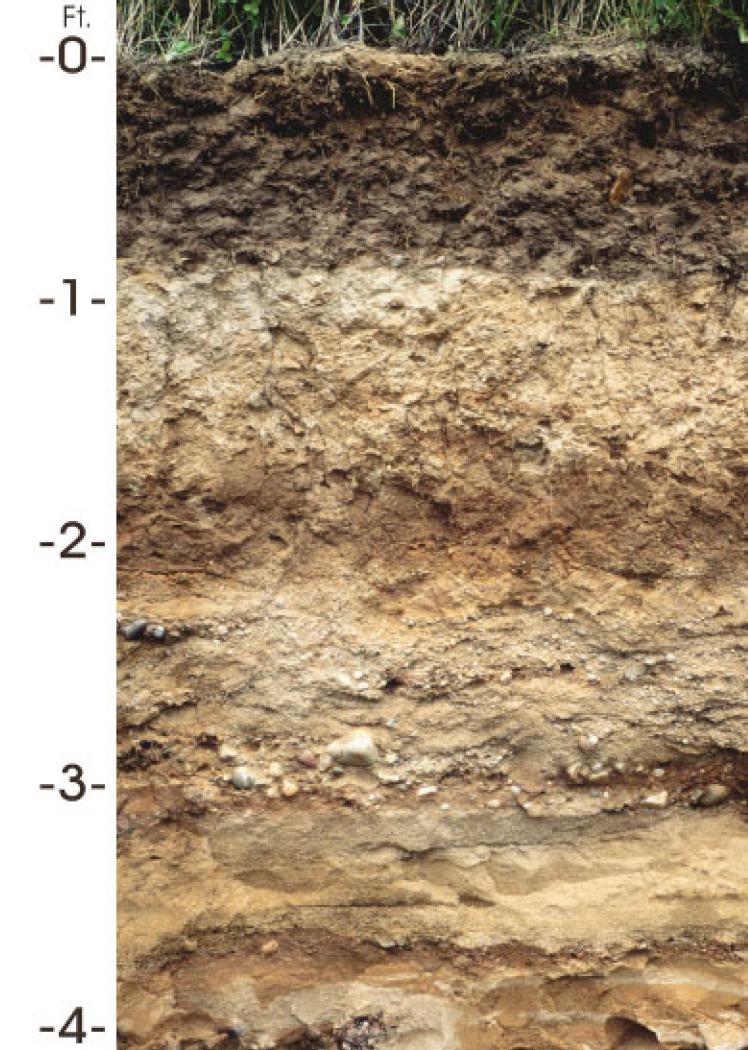
Look down as well as across a field. Surface colour, a change in texture, stones, a hard layer or a seasonal water table can define very different environments at adjacent depths. The soil horizons guide explains how to describe those layers. An observation pit or soil core is useful before installation because a sensor placed across a sharp boundary may describe neither layer well.
What the measurements actually describe
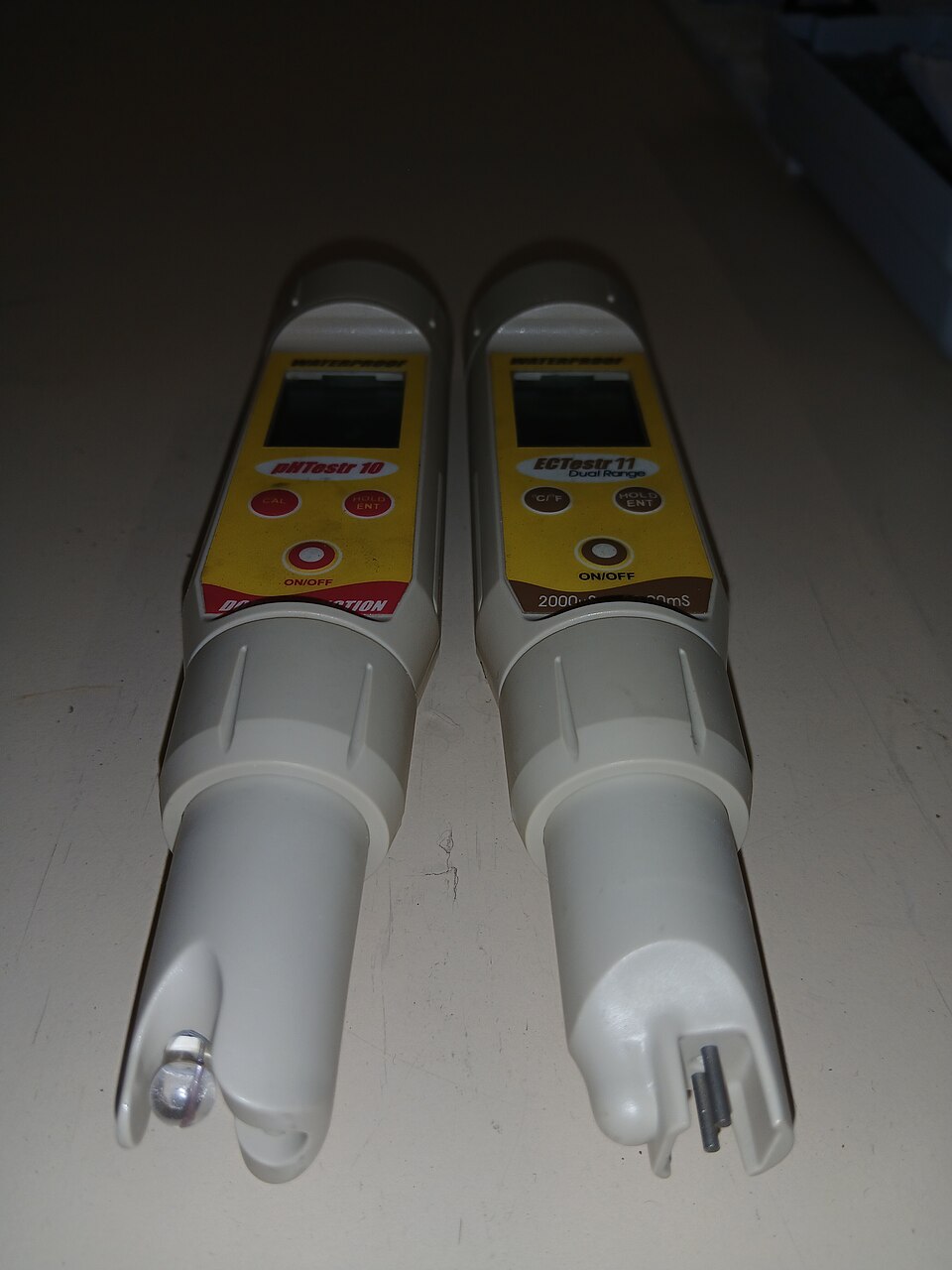
Moisture content estimates how much water occupies a soil volume. Matric potential describes how tightly that water is held. Electrical conductivity reflects how readily the moist soil conducts electricity and is influenced by salts, water, temperature and texture. Soil pH describes acidity or alkalinity under a specified test method. These variables are related, but one reading cannot replace all the others or prove that a crop has enough nutrients.
Choose a decision before choosing a measurement. For irrigation, follow moisture or water tension at meaningful depths and compare the trend with crop demand. For a suspected salinity problem, combine sensor trends with irrigation water and laboratory tests. For fertiliser planning, collect representative samples using a suitable laboratory method. A connected probe is particularly valuable for tracking changes between field visits, rather than supplying a complete soil diagnosis.
A useful first field assessment
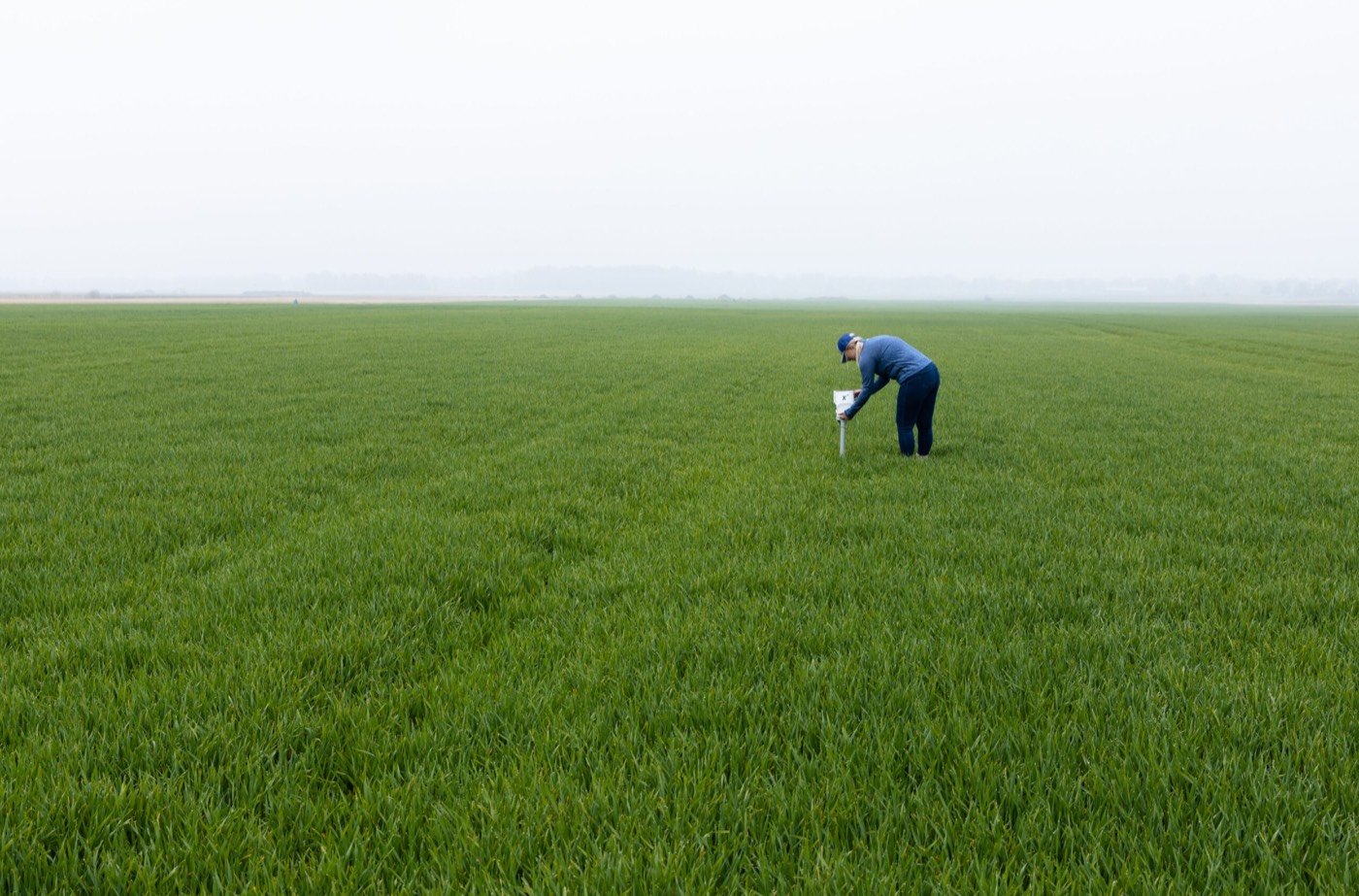
Begin by dividing the field into areas with similar soil, slope, crop and irrigation management. Describe a representative profile in each important zone, identify the active roots, and record the wetting pattern of the irrigation system. Keep unusually wet depressions and compacted headlands separate from the main production area unless those are the conditions you deliberately want to investigate.
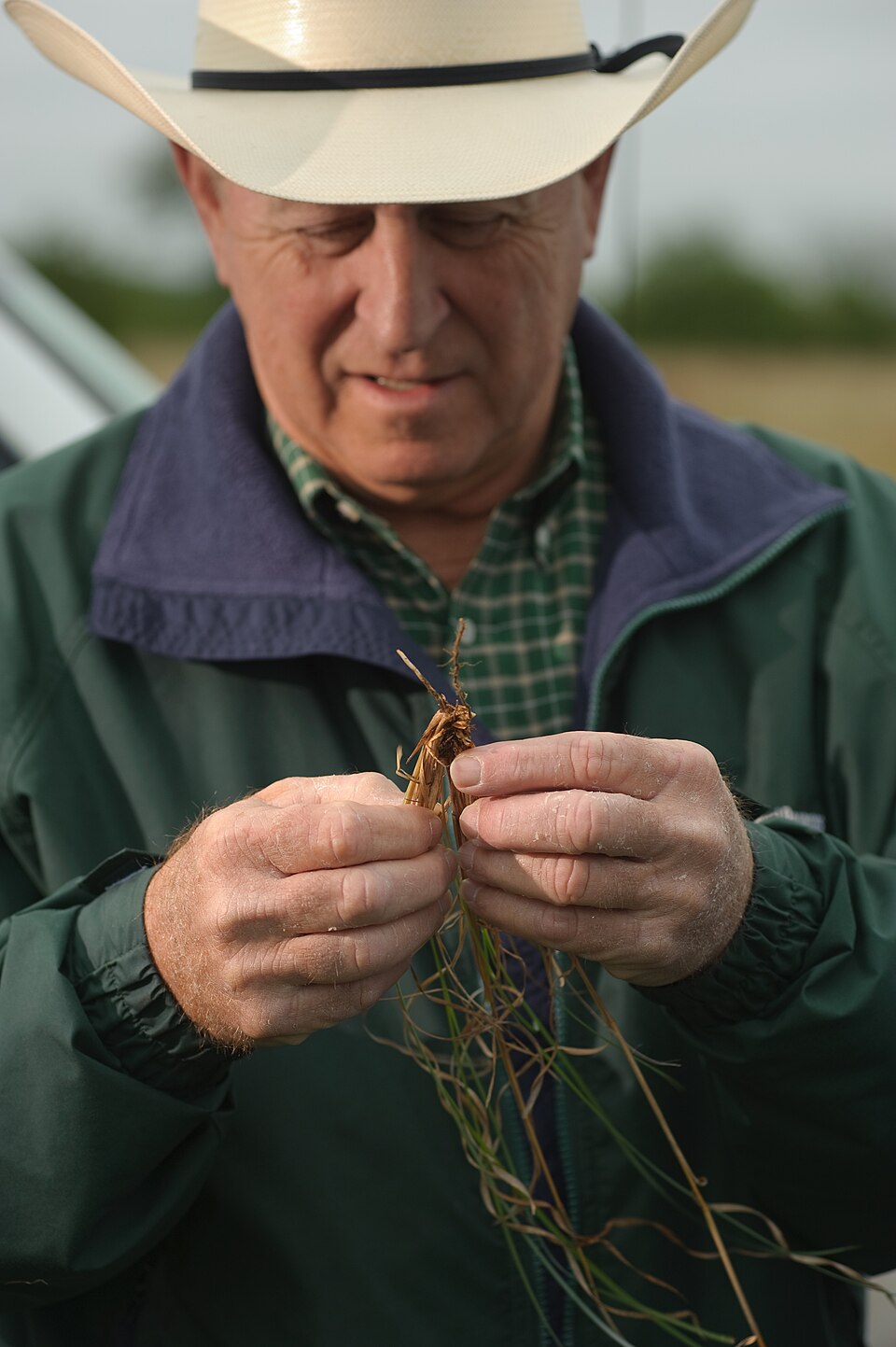
Then start a small monitoring programme that can answer a specific question: whether water reaches the lower roots, how rapidly the surface dries, or whether one irrigation zone behaves differently. Use texture by feel for an initial classification and laboratory sampling for decisions requiring a defined analytical result. Record management events alongside readings so the soil measurements remain connected to what happened in the field.