Collect the soil that answers your question
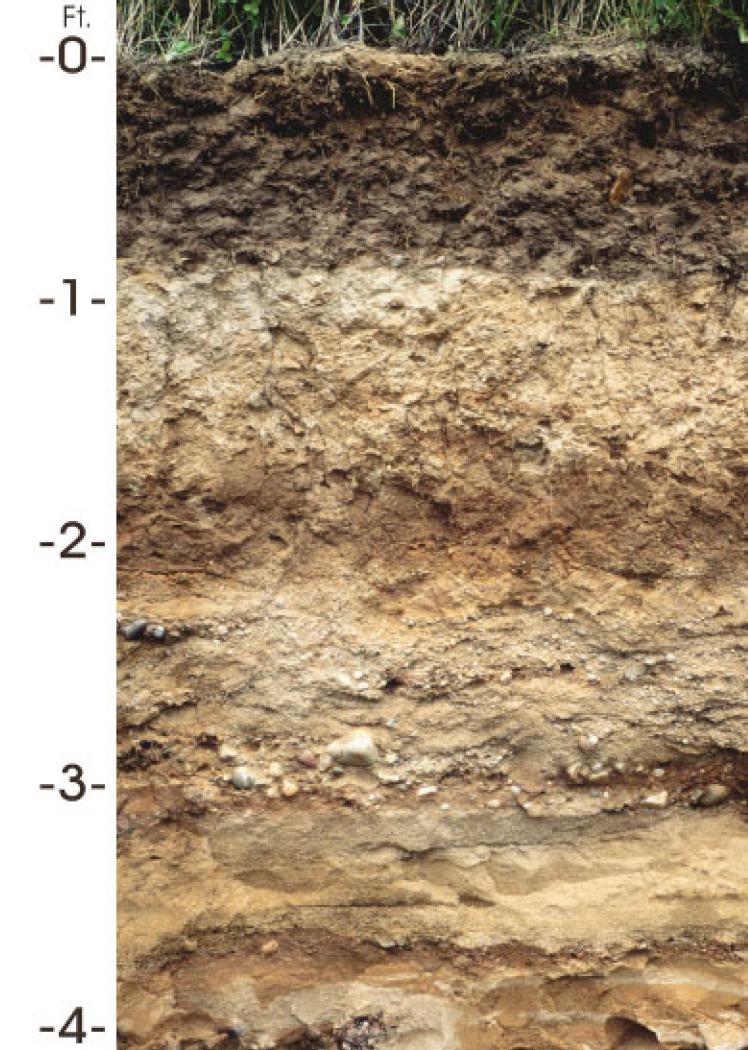
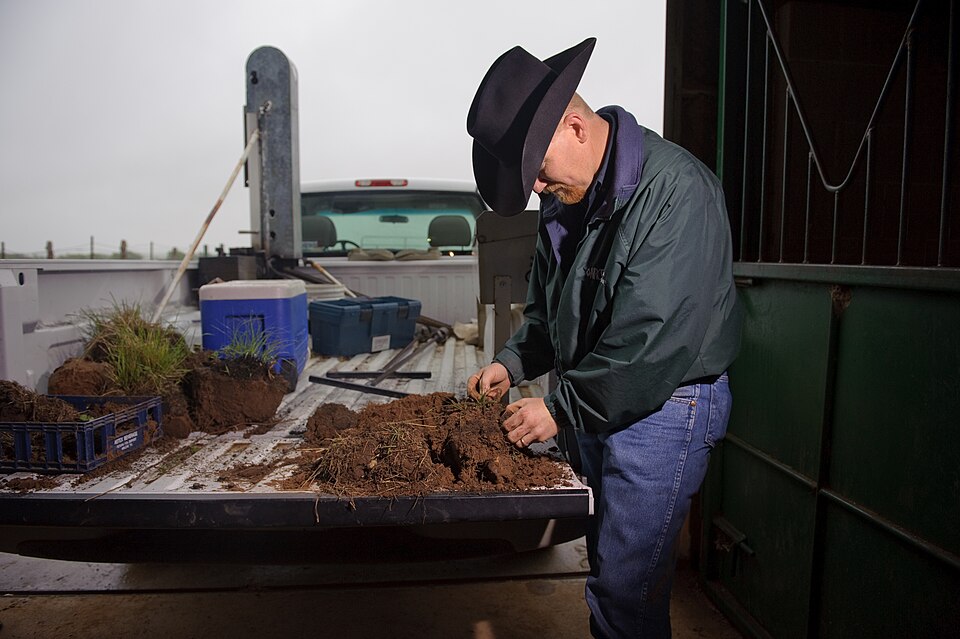
Choose the location and depth before assessing texture. A surface handful can describe the cultivated layer, while a deeper sample may reveal material with quite different irrigation behaviour. Keep management zones and clearly different layers separate. Remove coarse fragments and roots when examining the fine-earth material, and record stones separately rather than counting them as sand. Note where the sample was collected relative to emitters, machinery tracks and crop rows.
Texture describes proportions of sand, silt and clay in the mineral fraction. It does not directly measure organic matter, structure, pH or salinity. A dark colour alone cannot establish that a soil is loam or fertile. Our texture overview explains the particle classes, while the following sequence focuses on identifying them in a field sample.
Use feel and ribbon behaviour as field evidence
Moisten a small portion gradually and knead it to an even consistency. Excess water can obscure the behaviour. Sand contributes grittiness, silt can feel smooth or floury, and clay contributes stickiness and plasticity. Working a moist sample into a ribbon between fingers provides another observation. Its ability to hold together and the feel of the material support a classification estimate when used with a recognised texture-by-feel guide.
The USDA workflow combines several tests rather than relying on ribbon length alone. Practice improves consistency, but field estimates remain affected by the operator and material. Record the observations as well as the proposed class so another person can understand the assessment. Strong organic content, unusual mineralogy or a mixed sample can make a simple field classification difficult.
Read the USDA texture triangle
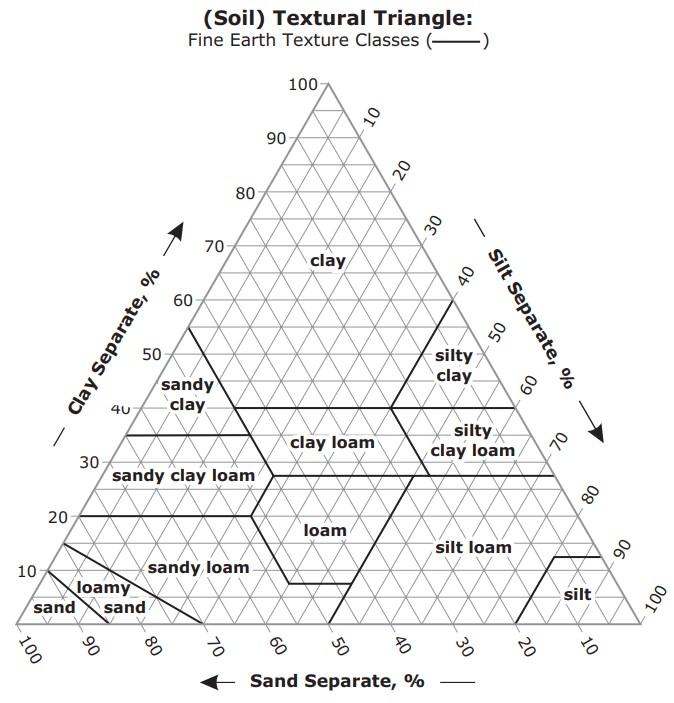
A laboratory result reports percentages of sand, silt and clay that sum to 100 for the defined mineral fraction. Each axis of the USDA triangle corresponds to one fraction. Locate their intersection to identify the textural class. Loam describes a class with a particular range of proportions; it does not require equal thirds. A point close to a boundary may change class after a modest measurement difference.
Follow the axis directions carefully rather than reading each side as a conventional horizontal graph. A laboratory or the USDA calculator can provide the classification directly. Different classification systems use different particle-size limits and boundaries, so preserve the system used in the report. The USDA triangle should be interpreted with percentages determined under compatible conventions.
Know when a laboratory result is worthwhile
Obtain laboratory particle-size analysis when the classification will guide a significant installation, a soil-specific calibration or a dispute about field variability. Ask which fractions and preparation methods the report uses. A jar settling observation can illustrate that particles behave differently, but a simple home test may not separate dispersed clay and silt reliably. It should not automatically replace a laboratory method.
Compare samples from relevant layers and locations rather than blending the whole rooted profile into one texture result. Pair the analysis with sampling records and profile observations. The sampling design often matters more to interpretation than adding another decimal place to the reported percentage.
Turn the classification into a field plan
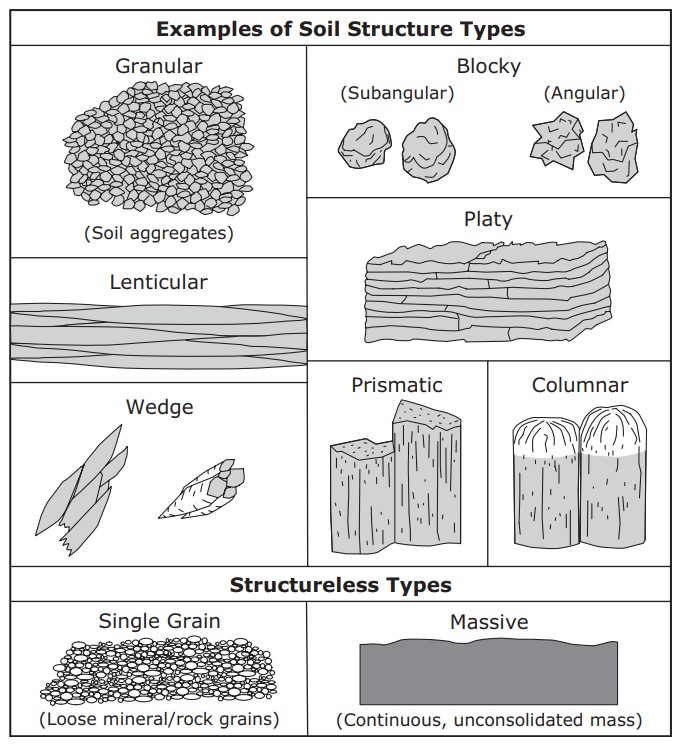
Texture helps anticipate retention and drainage, but structure, compaction, layering and roots determine how the field actually behaves. Use the result to define management zones and choose representative sensor positions. Observe wetting after irrigation and drying between applications before adopting thresholds. A coarse surface above finer subsoil can require a different interpretation from a uniform sandy profile.
Use the clay and sandy-soil irrigation guide to connect these observations with management. Where useful, combine moisture measurements with water tension. The objective is a description that explains the rooted soil, not a texture name treated as a complete irrigation prescription.
Common questions
Is loam one-third sand, silt and clay?
No. Loam is a defined texture class spanning a range of particle proportions.
Can I identify deeper soil from a surface sample?
Only the sampled material is described. Keep deeper layers separate when they answer a different rooting or irrigation question.